Why Families Should See the Same Dentist Together
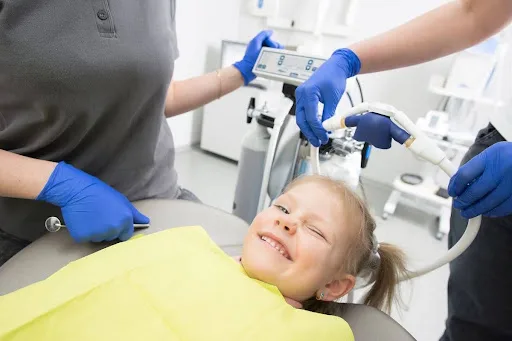
Most families don’t think twice about seeing different doctors for different needs — a pediatrician for the kids, an internist for mom, a cardiologist for grandpa. But dental care often gets fragmented in the same way, with children visiting a pediatric specialist while adults bounce between whoever accepts their current insurance. According to the Centers for Disease Control and Prevention’s 2023 Oral Health Surveillance Report, untreated tooth decay affects nearly 1 in 5 children aged 5–11 and a similar proportion of adults — suggesting that fragmented, episodic care isn’t serving families as well as it could.
The shift toward consolidated family dental care isn’t just about convenience. As dental practices increasingly offer comprehensive services spanning every age group, families who choose a single provider gain something that goes well beyond a shorter commute: coordinated oversight of oral health patterns that can run across generations, consistent relationships that reduce anxiety, and a provider who understands the full picture. Picture a household where the parents have a documented history of gum disease and their eight-year-old is already showing early signs of the same risk patterns — that’s exactly the kind of insight a shared dentist can act on early.
This article explores the specific, often overlooked advantages of family dentistry — from how it shapes preventive strategy across age groups, to how it handles behavioral challenges and financial realities that individual dental arrangements rarely address as effectively.
How Family Dentistry Supports Preventive Care for All Ages
Preventive dentistry looks radically different depending on who’s sitting in the chair. A six-year-old needs dental sealants applied to newly erupted permanent molars before decay has a chance to take hold. A parent in their forties may need more frequent periodontal screenings. A grandparent managing diabetes requires monitoring for the well-documented connection between blood sugar control and gum disease. A family dentist who sees all three in the same practice develops a working knowledge of each patient’s risk trajectory — not in isolation, but in context.
This matters because oral health risks often run in families. Genetic susceptibility to cavities, gum disease, and even jaw structure irregularities can pass from parent to child. A dentist seeing multiple generations in a household is far better positioned to flag early warning signs in a child based on what they already know about a parent’s history. That’s not a minor advantage — it’s the difference between catching a problem at its origin and treating it after it’s progressed.
Age-specific preventive protocols also benefit from continuity. When a dentist has tracked a child through their early years, the transition from primary to permanent dentition — a period when cavity risk spikes and orthodontic needs first emerge — gets managed with full context. There’s no reconstructing history from scattered records or relying on parental memory for details about past treatments.
For adults, the preventive calculus shifts toward systemic connections. Research published in the *Journal of Periodontology* has consistently linked periodontal disease with cardiovascular risk, making regular adult screenings more consequential than most patients realize. A family dentist integrated into the complete household’s care is more likely to recognize when an adult patient’s changing health history warrants adjustments to their dental monitoring schedule. That kind of proactive adjustment rarely happens when patients are treated as isolated cases rather than members of a health ecosystem.
How Family Dentists Manage Dental Anxiety and Behavioral Needs
Dental anxiety is one of the most common — and most underaddressed — barriers to consistent oral health care. It doesn’t just affect children; roughly a third of adults report some level of dental fear, and severe dental phobia is estimated to affect a meaningful portion of the adult population according to ongoing research in behavioral dentistry. When anxiety goes unmanaged, patients skip appointments, delay treatment, and arrive for procedures already in distress. Family dentists who see the same patients across years are uniquely positioned to interrupt that cycle before it calcifies.
Techniques for Reducing Child Dental Anxiety
Children’s dental anxiety typically begins not at the dentist’s chair but in the waiting room — or even at home during the conversation leading up to the appointment. Family dentists trained in behavioral approaches use what’s often called the tell-show-do technique: explaining a procedure in child-friendly language, demonstrating it on a model or the child’s hand, and then performing it. This predictability is foundational. Children who know what to expect are significantly less reactive than those who encounter each step as a surprise.
Continuity amplifies these techniques considerably. A child who has visited the same dentist since their first appointment at age one carries a history of positive, low-stakes interactions into every subsequent visit. By the time a more complex procedure is necessary, the relationship is already built. That’s a dramatically different experience than walking into an unfamiliar office for a filling.
Addressing Behavioral Challenges in Family Dental Care
Beyond anxiety, some children present behavioral challenges that require adapted approaches — including patients with autism spectrum disorder, sensory processing differences, or attention-related conditions. Family dentists experienced in these areas often modify the sensory environment, adjust appointment pacing, and work directly with parents to develop strategies that carry consistency between visits.
Crucially, this doesn’t require a specialty referral for every case. Many behavioral adaptations fall well within the scope of a well-trained family dentist, and maintaining that relationship within a familiar practice reduces the disruption that referrals can create for families already managing complex schedules and sensitivities.
Why Continuity of Care Builds Lifelong Dental Relationships
There’s a practical dimension to continuity that often gets overlooked in conversations about comfort and trust: records. A dentist who has seen a patient for fifteen years holds a longitudinal record of X-rays, treatment decisions, healing patterns, and medication histories that no intake form can replicate. When that patient develops a dental emergency — a cracked molar, a sudden abscess, a reaction to a dental material — their provider can make faster, better-informed decisions because the context already exists.
For practices like Lincoln Park family dentistry, that longitudinal relationship is foundational to how care gets delivered across an entire household. Rather than treating each visit as a standalone event, a family dentist who knows their patients builds a genuine clinical narrative over time — tracking changes in bite, gum recession, enamel wear, and emerging alignment issues before they escalate into costly interventions.
This continuity also has a measurable effect on trust, particularly across generations. When children grow up seeing the same dentist their parents see, the implicit message is that dental care is a normal, ongoing part of life rather than an episodic response to pain. That framing has real consequences for adult dental behavior. Patients who establish consistent dental relationships early are more likely to maintain them through the disruptions of college, early adulthood, and parenthood — precisely the life stages where dental care most commonly lapses.
For families navigating significant transitions — a child losing their last baby tooth, a teenager beginning orthodontic treatment, a parent entering the years when gum disease risk rises — having a provider who knows the full picture transforms those milestones from isolated clinical events into a coherent, managed arc of care.
What Comprehensive Family Dentistry Services Cover Across Life Stages
The scope of services within a modern family dental practice has expanded considerably beyond routine cleanings and fillings. Today’s family dentists routinely provide orthodontic screening and referral coordination, dental sealant application, fluoride treatments, periodontal therapy, oral cancer screenings for adults, and in many cases, early-phase orthodontic interventions for children. That breadth is what makes family dentistry genuinely different from simply having a general dentist — the care model is designed to scale with the patient.
For young children, the emphasis falls on establishing the mechanics of good oral hygiene and protecting newly erupted teeth. By school age, the focus shifts to monitoring the transition to permanent dentition and catching alignment issues early enough that intervention is simpler. Adolescent patients often require management around orthodontics, athletic mouthguards, and habits like grinding. Adults in their middle years typically face increasing focus on gum health, restorative work, and systemic connections. Seniors present distinct needs around dry mouth management (a common medication side effect), bone density considerations, and denture or implant care.
A family dentist doesn’t necessarily provide every service in-house — some cases require specialist referral — but the coordination advantage is significant. Rather than receiving a referral to an unfamiliar specialist with no context, patients benefit from a provider who communicates directly with specialists, follows up on outcomes, and integrates that information back into the ongoing care plan. For families managing multiple members with varying needs simultaneously, that coordination reduces the cognitive and logistical load considerably.
How Cost and Insurance Affect Family Dentistry Benefits
Dental insurance for families involves trade-offs that deserve a clear-eyed review. Most family dental plans operate on a structure that includes annual maximums per covered member, a waiting period for major services, and differentiated coverage tiers for preventive, basic, and major procedures. Understanding how those structures interact with a family’s actual usage patterns matters more than the premium alone.
One practical advantage of consolidated family dental care is administrative simplicity. When a single practice manages records and billing for every member of a household, families avoid the overhead of coordinating multiple provider relationships, each with separate insurance submissions, pre-authorization processes, and billing contacts. That efficiency has real value, particularly for households with multiple children or members who require more complex care.
Preventive services — cleanings, X-rays, sealants, fluoride treatments — are typically covered at or near 100% under most family dental plans, which means that consistent preventive care within a family practice effectively costs little out-of-pocket while reducing the likelihood of the more expensive restorative procedures that consume annual maximums quickly. The calculus is straightforward: a family that maintains regular preventive appointments tends to make far fewer claims against the major-service tier of their coverage.
Families evaluating dental plans should also look at whether their preferred practice participates as an in-network provider, since out-of-network care can shift cost-sharing ratios significantly. The right question isn’t just “what does this plan cover?” — it’s “how does this plan structure incentivize the kind of consistent, preventive care that actually protects long-term oral health?”