Top Roblox Games With Real In-Game Economies in 2026
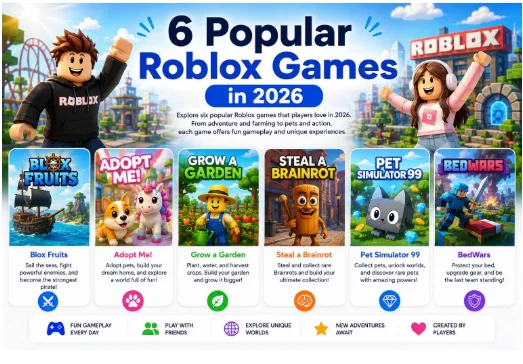
Roblox is not simply a video game. With 132 million daily active users across 180 countries, it has become one of the largest interactive platforms in the world — and within it, a collection of games have developed economies so mature and complex that players trade virtual items the same way collectors trade physical ones: based on rarity, condition, demand, and provenance.
In 2026, several Roblox games stand out for the depth and sophistication of their in-game economies. These are not casual systems — they involve real value variation, active secondary markets, and dedicated communities of players who treat item valuation as seriously as any financial decision. Here is a look at the games leading this space and what makes each economy distinctive.
Blox Fruits — The Fruit Trading Economy
Blox Fruits, developed by Gamer Robot Inc and released in January 2019, has grown into the third most-visited experience on Roblox with hundreds of thousands of concurrent players. The game draws from the One Piece anime universe, centering gameplay around devil fruit powers that grant players unique combat abilities across a three-sea open world.
What makes Blox Fruits economically significant is its layered fruit valuation system. Fruits are not equal in value even within the same type — permanent versions command significantly higher prices than standard ones, and mutations (Gold, Diamond, Rainbow) multiply baseline value by factors of 1.5, 2.5, and 5 respectively. This creates a market where the same item can vary in value by several multiples depending on its specific attributes.
Players who participate seriously in the Blox Fruits economy use the Blox Fruits Calculator to verify both sides of a proposed exchange before agreeing to anything — accounting for rarity, mutation status, and current market conditions rather than relying on estimates.
The game’s creator community has also been central to its longevity. Gamer Robot Inc embedded popular YouTubers directly into the game’s content, creating a feedback loop between creators and players that has sustained engagement across seven years of updates.
Adopt Me — The Pet Collector Economy
Adopt Me, developed by Uplift Games, holds the record as the single most-visited experience in Roblox history. Its economy centers on virtual pets — animals that players adopt, raise, and trade with each other. Limited-edition pets released during seasonal events become permanent collectibles once the event ends, with value determined entirely by how many were distributed and how much demand persists afterward.
The Adopt Me economy has introduced millions of young players to market fundamentals — supply and demand, scarcity premiums, and the difference between an item’s original cost and its current market value. With 148,000 concurrent players recorded as of mid-2026, it remains one of the most active trading environments on the platform.
Murder Mystery 2 — The Knife Collector Economy
Murder Mystery 2, created by developer Nikilis in 2014, is one of the oldest continuously active games on Roblox. With 477,000 concurrent players on record, it has maintained a dedicated player base across more than a decade — a remarkable achievement on any gaming platform.
MM2’s economy is built around knives, guns, and pets that function as collectibles rather than pure gameplay tools. Godly-tier items — the rarest category — command significant value based on their history, limited availability, and community standing. Seasonal releases, limited editions, and items tied to specific in-game moments all carry premiums over standard versions.
The longevity of MM2’s economy has produced genuine institutional knowledge around valuation. Experienced traders use the MM2 Checker to reference current market data before any significant exchange — ensuring neither party operates at an information disadvantage in a market with years of price history behind it.
Nikilis has sustained the game by maintaining the integrity of its item economy — keeping rare items genuinely rare, releasing seasonal content consistently, and preserving the conditions that make the secondary market function.
Grow a Garden — The Crop and Pet Economy
Grow a Garden emerged as one of Roblox’s fastest-growing experiences, centering gameplay on planting, harvesting, and trading virtual crops and pets. What distinguished it from other casual games was the sophistication of its underlying economy — mutations applied to crops and pets created significant value variation within the same item category, rewarding players who understood the system over those who traded on surface assumptions.
The game’s crop valuation system attracted players who approached trading analytically. The Grow a Garden Trade Calculator became a reference tool for players evaluating proposed crop exchanges — providing current value data for both sides of a trade before any agreement was made.
Grow a Garden attracted an older demographic than typical Roblox titles, partly because the economic depth rewarded analysis over reflexes. Pet mutations added a second layer to the economy alongside crops, with certain rare combinations commanding significant premiums over standard versions.
For players tracking broader market conditions across the game’s full item catalog, the Grow a Garden Calculator provided a comprehensive value reference covering crops, pets, and mutation modifiers — useful for players managing larger portfolios of in-game assets.
Brookhaven and Social Economy Games
Not every Roblox economy is built around combat or survival. Brookhaven, one of Roblox’s most-played social games, has developed an active secondary market around virtual clothing, accessories, and cosmetic items. Limited drops and seasonal exclusives in these social games create collector value similar to physical streetwear or sneaker markets — items are worth what the community agrees they are worth, based on how many exist and how much people want them.
This category of Roblox game demonstrates that in-game economies do not require complex gameplay systems to develop real depth. The same market principles — scarcity, demand, and community-established value — apply whether the item in question is a rare knife in MM2 or an exclusive outfit in a social roleplay game.
Steal a Brainrot — The Meme Character Economy
Steal a Brainrot is a Roblox game built around the viral Brainrot meme characters that swept global internet culture in 2025 — AI-generated characters with absurdist names and lore that spread across TikTok, YouTube, and gaming platforms simultaneously. The game’s economy centers on obtaining, trading, and holding Brainrot characters of varying rarity tiers.
The most notable character in the game’s economy is Tung Tung Tung Sahur — an Indonesian Brainrot character created by TikTok user Noxa on February 28, 2025. In Steal a Brainrot, the character reached Secret rarity with a $500M in-game cost and $1.5M per second income before being removed twice due to copyright disputes with the character’s original creator and managing company Mementumlab. Characters removed from games often become the most sought-after collector items in player economies — unavailability is its own form of scarcity.
The character’s removal from Steal a Brainrot also drove significant search interest around the character’s broader story — origin, value history, removal timeline, and Fortnite skin release. The dedicated resource at Tung Tung Tung Sahur covers the full character history including both removals, the copyright dispute, Fortnite skin details, and the related Coffin Tung Tung Tung Sahur Lucky Block that remains the rarest item associated with the character.
The Brainrot economy in Steal a Brainrot illustrates how cultural momentum outside a game can drive in-game value — a character that became a global internet phenomenon commanded prices and scarcity premiums that purely game-native characters rarely achieve.
Why Roblox In-Game Economies Matter Beyond the Game
The economies inside these Roblox games are not trivial. They operate on the same principles as real markets — supply and demand, rarity premiums, information asymmetry, and the role of trusted reference data in reducing the advantage held by more experienced participants.
Players who spend significant time in these economies are developing genuine market intuition. The habit of verifying value before committing to an exchange, understanding what attributes drive premiums, and recognizing when a deal is below market value — these are transferable skills that apply well beyond virtual item trading.
Roblox’s combined daily user base exceeds 132 million. The economies running inside its top games process millions of player-to-player exchanges every day. The scale makes these among the largest active secondary markets in the world, virtual or otherwise.
Frequently Asked Questions
Q: Which Roblox game has the most developed in-game economy?
A: Murder Mystery 2 has the longest-running economy, active since 2014. Blox Fruits has the most complex attribute-based valuation system. Adopt Me has the largest player base. Each is mature in different ways.
Q: How do Roblox players verify item values before trading?
A: Dedicated value tools built for specific games — these account for rarity, mutation status, item permanence, and current market conditions that flat price lists cannot capture.
Q: Are virtual Roblox items worth real money?
A: Indirectly, yes. Robux — the platform’s currency — can be converted to real money through the Developer Exchange program. Items with high Robux value therefore have real monetary equivalents, and players treat significant exchanges accordingly.
Q: What happened to Tung Tung Tung Sahur in Steal a Brainrot?
A: The character was removed twice — in September 2025 and April 2026 — due to copyright disputes between the game developer and the character’s original creator. Removed characters often become collector items due to permanent scarcity.
Q: Why do some Roblox items become more valuable over time?
A: Scarcity is the primary driver. Limited-edition items, seasonal releases, and items tied to removed content all become permanently scarce once availability ends. Combined with sustained demand from active player communities, this creates the same collector dynamics seen in physical markets.
Conclusion
Roblox’s top games have built economies that operate on real market principles — and in 2026, those economies are more sophisticated than most observers outside the platform realize. Blox Fruits, Murder Mystery 2, Adopt Me, Grow a Garden, and Steal a Brainrot each represent a different model of how virtual item value develops, sustains itself, and attracts serious participant communities.
The players inside these economies are not just gaming. They are developing market intuition, learning to verify value before committing resources, and participating in secondary markets that process enormous transaction volume every day. The virtual and the real are closer than the surface suggests — and the games making that connection most clearly are all, in one way or another, running on Roblox.
Disclaimer: This article is for informational and entertainment purposes only. Roblox games, virtual currencies, and in-game economies may change over time. Players should review each game’s rules and Roblox’s terms before spending money or trading virtual items. We do not guarantee earnings, item values, or financial returns from any Roblox game.