Nurturing Cognitive, Social, and Emotional Development in Early Childhood
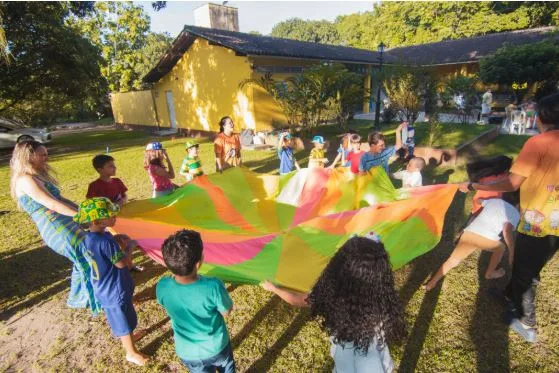
Early childhood is a period of remarkable neurological transformation. Between birth and age five, a child’s brain develops more rapidly than at any other point in life, forming over one million new neural connections every single second. By the time a child steps into a primary school classroom, roughly 90% of their adult brain structure is already established.
For Australian parents navigating an increasingly complex educational landscape, this biological reality brings both opportunity and pressure. The choices made during these formative years profoundly shape a child’s lifelong capacity for learning, emotional resilience, and social adaptability. Rather than viewing early childhood merely as a waiting room for formal schooling, forward-thinking families treat it as a vital foundation for holistic human development.
1. Beyond Basic Babysitting: The Science of Intentional Play
Historically, early childhood care was viewed primarily through the lens of childminding—a safe environment while parents fulfilled work commitments. Today, neuroscience and developmental psychology have permanently shifted that paradigm toward intentional, play-based learning.
When children engage in structured play, they are not simply passing time; they are executing complex cognitive operations:
- Executive Functioning: Managing multi-step game rules builds working memory, cognitive flexibility, and self-regulation.
- Spatial and Mathematical Reasoning: Constructing block towers or sorting natural objects lays the groundwork for later STEM concepts.
- Problem-Solving Mechanics: Unstructured outdoor exploration encourages risk assessment, trial-and-error reasoning, and resilience when plans fail.
In Australia, the Early Years Learning Framework (EYLF) explicitly highlights play as the primary vehicle for early learning. When children are allowed to lead their investigations under the subtle guidance of qualified educators, they develop an intrinsic drive to learn. This internal motivation is far more predictive of long-term academic success than early rote memorization.
2. Social-Emotional Intelligence: The Ultimate School Readiness Metric
While many parents naturally monitor academic milestones—such as recognizing letters or counting to twenty—educators consistently emphasize that social-emotional readiness is the true differentiator for a smooth transition into primary school.
A child who can recite the alphabet but struggles with emotional regulation will face significant hurdles in a structured classroom setting. Conversely, a child who can navigate peer conflicts, express frustration constructively, and follow shared routines will thrive academically because their emotional bandwidth remains free for learning.
Key Pillars of Early Social-Emotional Competence
- Emotional Granularization: Helping children name complex feelings (e.g., distinguishing between anger, disappointment, and sensory overload) lowers physical stress responses and builds self-control.
- Co-Regulation to Self-Regulation: Young children learn to manage big emotions through calm, supportive interactions with attuned adults before they can self-soothe independently.
- Peer Negotiation: Collaborative group activities teach turn-taking, active listening, and empathy—skills that form the bedrock of social confidence.
Investing time in these core emotional competencies ensures that children enter formal schooling equipped to build meaningful friendships and manage classroom expectations without undue anxiety.
3. Selecting the Right Environment: Structuring the Early Years
Creating a rich developmental environment requires a thoughtful balance between home life and professional early learning settings. While home provides the primary foundation of security and familial values, structured group settings offer critical social dynamics that individual households cannot easily replicate.
When evaluating external learning environments, Australian families often look for programs that align with contemporary developmental research and the national quality framework. Enrolling a child in a high-quality kids early learning program provides structured opportunities to develop social agency, participate in collaborative projects, and experience diverse sensory activities supervised by trained early childhood professionals.
To determine if an early learning setting aligns with best practices, consider evaluating these core elements:
| Key Evaluation Criteria | Ideal Indicator | Red Flag |
| Educator Engagement | Warm, eye-level conversations; active listening | Passive supervision; adult-centric focus |
| Learning Environment | Accessible, open-ended natural materials | Predominantly plastic, single-use toys |
| Routine Structure | Flexible schedules guided by children’s needs | Rigid transitions regardless of engagement |
| Social Philosophy | Focus on guided conflict resolution | Immediate reliance on punitive time-outs |
4. Bridging the Gap: Cultivating Curiosity at Home
Professional early childhood education yields the greatest impact when paired with an enriching home environment. Parents do not need to turn their living rooms into formal classrooms; rather, daily household routines offer rich learning opportunities when approached with intention.
High-Impact Home Strategies
- Rich Conversational Environments: Engage in “serve-and-return” interactions. When a child points or asks a question, respond with descriptive language, open-ended prompts, and rich vocabulary.
- Shared Interactive Reading: Don’t just read the text on the page. Ask open questions: “Why do you think the character looks sad?” or “What do you think happens next?”
- Involvement in Daily Logistics: Cooking together teaches practical measurement, chemistry, and fine motor skills, while sorting laundry provides real-world experience with categorization.
- Embracing “Safe Struggle”: Avoid stepping in immediately when a child encounters a minor physical or cognitive hurdle. Allowing them to work through manageable frustration builds a growth mindset.
By embedding learning opportunities into ordinary moments, parents reinforce the notion that discovery is a continuous, enjoyable part of daily life.
The Long-Term Horizon
The early childhood years pass remarkably quickly, yet their impact lasts a lifetime. The cognitive pathways established during these early years serve as the permanent framework for future academic achievements, professional pursuits, and personal relationships.
By prioritizing play-based discovery, nurturing emotional regulation, choosing supportive educational environments, and fostering curiosity at home, Australian parents can provide their children with far more than just school readiness—they offer a lifelong love of learning and the emotional resilience to navigate an ever-changing world.