Are You Optimizing Costs for Allen-Bradley PLCs in Manufacturing?
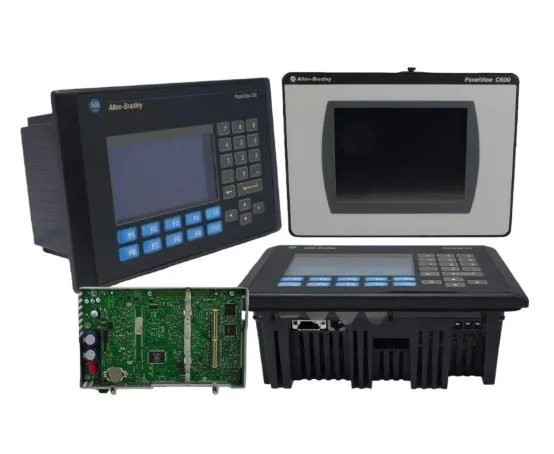
Manufacturing operations account for a staggering 70% of total business costs in many industrial sectors, and a significant portion of that figure ties directly to automation infrastructure. At the heart of modern production lines sit Allen-Bradley PLCs — the programmable logic controllers that keep assembly, processing, and packaging systems running with precision. For procurement officers, these components represent both a critical investment and a persistent budget challenge.
The pressure is real: leadership demands leaner spending, yet any compromise on component quality or delivery reliability can trigger costly downtime. A single unplanned production halt can erase weeks of savings in a matter of hours. Sourcing Allen-Bradley PLCs and related automation supplies means navigating fluctuating market prices, lead time uncertainties, and a complex web of authorized distributors and third-party vendors.
This article cuts through that complexity. Whether you’re managing a mid-sized facility or overseeing procurement across multiple plants, the strategies outlined here will help you secure competitive pricing, maintain supply chain resilience, and align your automation purchasing decisions with long-term operational goals — without sacrificing the reliability your production floor depends on.
The Strategic Importance of Allen-Bradley PLCs and Automation Supplies
Allen-Bradley PLCs, manufactured by Rockwell Automation, are programmable logic controllers that serve as the computational backbone of industrial automation. They monitor inputs from sensors and field devices, execute control logic, and drive outputs to motors, actuators, and other machinery — all in real time. From automotive assembly lines to food processing facilities, these controllers manage the sequencing, safety interlocks, and process regulation that keep production consistent and predictable.
But PLCs rarely operate in isolation. They function within a broader ecosystem of automation supplies: I/O modules, communication cards, power supplies, human-machine interfaces, and motion control components. Each element in this network must be sourced, maintained, and replaced on a schedule that aligns with production demands. A gap anywhere in that chain — a delayed communication module, an out-of-stock power supply — can stall an entire line just as effectively as a failed controller.
This interconnected reality makes procurement strategy inseparable from operational performance. When sourcing decisions are reactive — triggered only by equipment failure or urgent requisitions — costs spike and lead times compress dangerously. Conversely, a disciplined procurement approach that accounts for component lifecycles, supplier relationships, and inventory positioning directly reduces unplanned downtime and total cost of ownership. For procurement officers, understanding the full scope of Allen-Bradley’s automation ecosystem isn’t just technical knowledge — it’s the foundation for every cost-saving decision that follows.
Actionable Strategies for Finding Competitive Prices on Allen-Bradley PLCs
Price volatility is one of the most persistent frustrations in automation procurement. Allen-Bradley PLCs carry premium price tags that reflect their engineering quality, but that doesn’t mean procurement officers are powerless against inflated costs. The key is shifting from passive purchasing — accepting whatever price a single supplier quotes — to an active, intelligence-driven sourcing approach.
Start with a structured market analysis. Before issuing any purchase order, benchmark current pricing across at least three to five suppliers, including authorized distributors, independent dealers, and online industrial marketplaces. Prices for the same part number can vary by 15–30% depending on the channel and timing. Tracking these variations over several months builds a reliable baseline that strengthens your negotiating position and flags when a quote is genuinely competitive versus inflated.
Volume consolidation is another underutilized lever. Many procurement teams purchase components reactively, in small quantities, at full price. Consolidating orders across departments or plant locations — even if delivery is staggered — often unlocks tiered pricing that individual requisitions never reach. Present suppliers with a 12-month projected spend rather than a single order, and negotiate accordingly.
Leveraging OEM Parts and Generic Automation Supplies
OEM parts — components manufactured by Rockwell Automation or produced to exact OEM specifications — guarantee compatibility and performance, but they aren’t always the most cost-efficient choice for every application. For non-critical or high-turnover components like terminal blocks, cable assemblies, or standard I/O modules, quality-compatible alternatives from reputable third-party manufacturers can deliver equivalent performance at 20–40% lower cost. The critical discipline here is vetting: require suppliers to provide datasheets, compliance certifications, and compatibility documentation before approving any substitute. Avoid unverified gray-market parts, which carry hidden risks including counterfeit components and voided warranties. Reserve genuine OEM sourcing for safety-critical modules, proprietary communication cards, and any component where firmware integration with existing Rockwell systems is non-negotiable.
Optimizing Deals with Rockwell Automation and Authorized Distributors
Rockwell Automation’s authorized distributor network — including partners like Rockwell’s PartnerNetwork program members — offers advantages beyond product availability. These distributors often provide technical pre-sales support, application engineering assistance, and access to loyalty pricing structures unavailable through general industrial suppliers. Build a formal relationship with your primary distributor’s account manager rather than transacting anonymously through online portals. Share your facility’s annual procurement roadmap, discuss upcoming projects, and ask explicitly about contract pricing, stocking agreements, and end-of-quarter discount windows. Distributors have pricing flexibility they rarely advertise — the procurement officers who access it are those who ask directly and demonstrate consistent, predictable purchasing volume. For facilities that also manage vehicle fleets or automotive equipment on-site, sourcing power components from specialized suppliers like Apter Power can similarly yield better pricing when approached with the same consolidated, relationship-driven strategy.
Ensuring Timely Delivery of Critical Control Modules and Components
Even the most competitive pricing strategy collapses in value if components arrive late. For production environments running lean inventories, a delayed I/O module or missing communication card can idle an entire line while the clock runs on labor, overhead, and missed output targets. Delivery reliability isn’t a secondary concern — it’s the other half of effective procurement, and it demands the same structured discipline as cost management.
Inventory forecasting is the most direct tool available. Analyze your facility’s historical consumption data for high-turnover components — the parts that fail most frequently or require scheduled replacement — and establish reorder points that account for supplier lead times plus a buffer for disruption. Most modern ERP systems can automate these triggers, but the underlying data must be accurate and regularly reviewed. A reorder point calculated on outdated consumption rates is no better than guesswork.
Supplier performance metrics should be tracked formally, not anecdotally. Measure on-time delivery rates, order accuracy, and response times to expedite requests for each active vendor. Review these metrics quarterly and use them as leverage in supplier conversations. Vendors who know their performance is being measured consistently tend to prioritize those accounts when allocation constraints arise. Equally important is developing contingency plans before a crisis occurs — identify backup suppliers for your ten most critical part numbers and confirm their current stock positions at least twice per year.
Streamlining Procurement Processes for Automation Supplies
Procurement delays often originate internally before a supplier is ever contacted. Approval chains, manual purchase order generation, and fragmented communication between maintenance, engineering, and purchasing teams add days to lead times that are already tight. Digitizing order workflows — using procurement platforms that integrate with your ERP and allow maintenance teams to submit requisitions directly against pre-approved vendor catalogs — eliminates much of this friction. Establish clear escalation protocols for urgent orders, including pre-negotiated expedite fees with primary suppliers so that emergency requests move immediately rather than stalling in contract discussions during a production crisis.
Building Resilient Supply Chains with Multiple Vendors
Single-source dependency is one of the highest-risk positions a procurement team can hold for critical automation components. When that one supplier faces allocation shortages, shipping delays, or inventory gaps, your production schedule absorbs the full impact. Deliberately qualifying two or three vendors for each critical Allen-Bradley part number — authorized distributors, independent dealers, and reputable online industrial suppliers — distributes that risk without significantly increasing administrative overhead. Beyond vendor diversification, maintain a strategic stockpile of the components most likely to cause extended downtime if unavailable: specific CPU modules, proprietary communication cards, and safety relay modules that carry long lead times from the factory. Calculate the carrying cost of that inventory against the cost of a single unplanned production halt, and the math almost always justifies the buffer.
Integrating Rockwell Automation Solutions for Holistic Cost Management
Procurement officers who focus exclusively on unit pricing often miss a larger opportunity: the cumulative savings available when Allen-Bradley hardware is paired strategically with Rockwell Automation’s software and service ecosystem. Tools like FactoryTalk software suite enable real-time asset monitoring, predictive maintenance scheduling, and performance analytics that directly reduce unplanned component failures — meaning fewer emergency purchases at premium prices and more controlled, budget-friendly replacement cycles.
Lifecycle management is where this integration pays its clearest dividends. Rockwell Automation publishes product lifecycle status for its entire PLC portfolio, categorizing components as Active, Mature, or End of Life. Procurement teams that track these designations can plan replacement projects months or years in advance, sourcing components at standard pricing rather than scrambling for last-available inventory at inflated costs when a product reaches discontinuation. Engage your Rockwell distributor or account manager to build a lifecycle roadmap for your installed base — this single exercise often reveals near-term obsolescence risks that, if addressed proactively, eliminate costly emergency sourcing scenarios entirely.
Service agreements also deserve evaluation as cost management instruments. Rockwell’s TechConnect support contracts provide access to technical expertise that reduces troubleshooting time and prevents misdiagnosed failures from generating unnecessary parts orders. When maintenance teams can resolve issues remotely with expert guidance, the number of precautionary component replacements — and their associated costs — drops measurably. Treating Rockwell’s broader solution portfolio as a cost management platform, rather than simply a product catalog, shifts procurement from reactive spending to structured, lifecycle-aligned investment.
Advanced Tips: Maximizing Value with Control Modules and OEM Parts
Selecting the right control module for a specific application goes beyond matching part numbers — it requires aligning processing capacity, I/O density, and communication protocol support with actual production demands rather than over-specifying for theoretical future needs. Over-engineered selections drive unnecessary cost without operational benefit. When integrating OEM parts, maintain detailed installation records and firmware version logs to ensure compatibility during future upgrades, and establish a routine inspection schedule for high-cycle components to catch wear before failure. These practices extend equipment service life, reduce reactive purchasing, and keep replacement costs predictable within your annual budget.
Turning Procurement Discipline Into Operational Resilience
Cost optimization for Allen-Bradley PLCs and automation supplies isn’t a one-time exercise — it’s an ongoing discipline that compounds in value over time. The strategies covered here form a practical framework: benchmark pricing across multiple channels, consolidate volume to unlock tiered discounts, qualify compatible alternatives for non-critical components, and build genuine relationships with authorized distributors who have pricing flexibility they don’t advertise. On the delivery side, forecasting consumption data, tracking supplier performance formally, diversifying your vendor base, and maintaining strategic stockpiles of high-risk components collectively transform your supply chain from a vulnerability into a competitive advantage.
The procurement officers who achieve the greatest savings aren’t those who chase the lowest individual quote — they’re the ones who approach automation sourcing as a strategic function, aligned with lifecycle planning, production schedules, and long-term supplier partnerships. Every reactive emergency purchase is a signal that the system needs adjustment; every proactive replacement cycle is evidence that the strategy is working.
Start by auditing your current procurement practices against the approaches outlined here. Identify where your process is reactive, where single-source dependencies exist, and where lifecycle visibility is missing. Those gaps represent your clearest opportunities for measurable cost reduction — and addressing them systematically is how procurement officers turn budget pressure into operational resilience.