Bean Packaging Machines: Handling Weight, Shape, and Freshness
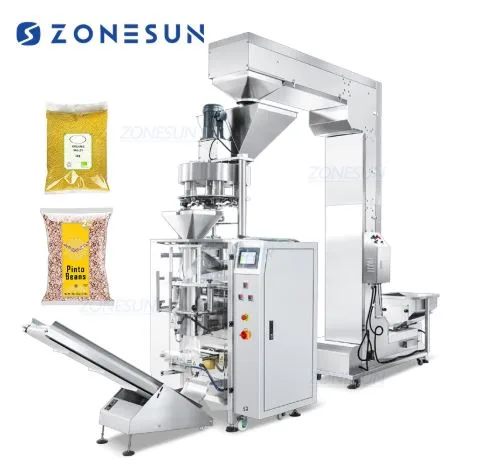
Beans — whether coffee, dried legumes, or roasted snacks — present a packaging challenge that’s different from powders or liquids. They’re irregular in shape, vary in size even within the same batch, and often need protection from moisture, oxygen, or crushing during transport. Bean packaging machines are built specifically to handle these quirks, combining accurate weighing with gentle handling to get beans from bulk storage into sealed, shelf-ready bags.
What a Bean Packaging Machine Does
Most bean packaging lines follow a similar sequence:
- Weighing or measuring – Beans are measured by weight or volume into precise portions
- Bag forming or feeding – A bag is either formed from a roll of film or fed in pre-made
- Filling – The measured beans drop into the open bag
- Degassing (for coffee) – Excess air or gas is removed, or a one-way valve is added
- Sealing – The bag is closed, often with a resealable zipper or heat seal
The exact configuration depends heavily on the type of bean and whether it needs specialized handling, like coffee’s need for gas release after roasting.
Weighing Methods for Beans
Multi-Head Weighers Widely used for beans because of their ability to combine several small weighed portions into an accurate total, compensating for the natural size variation between individual beans. This method is common for coffee beans, dried legumes, and snack-style roasted beans.
Volumetric Fillers Measure beans by volume rather than weight, which works well for products with fairly consistent size and density but can be less accurate for beans with more size variation.
Auger or Vibratory Fillers Sometimes used for smaller legumes or split beans, where a controlled feed rate helps maintain accuracy without the mechanical complexity of a multi-head weigher.
Coffee Beans: A Special Case
Coffee beans require additional handling most other beans don’t. Freshly roasted coffee continues releasing carbon dioxide for days after roasting, and sealing it too soon can cause bags to swell or even burst. Coffee bean packaging machines typically address this by:
- Degassing before sealing – Allowing roasted beans to rest before packaging
- One-way degassing valves – Fitted into the bag to let gas escape without letting oxygen in, preserving freshness
- Nitrogen flushing – Replacing oxygen in the bag with nitrogen to extend shelf life
Any business packaging roasted coffee needs a machine — or a packaging process — that accounts for this gas release, or bags will fail after sealing.
Bag and Packaging Styles
- Stand-up pouches with valves – Common for coffee, offering shelf visibility and gas release
- Flat or gusseted bags – Frequently used for dried beans, legumes, and lentils
- Vacuum-sealed bags – Used for beans requiring extended shelf life or reduced package volume
- Multi-wall paper bags – Common for bulk or wholesale bean packaging in larger quantities
Key Factors to Consider Before Buying
Bean Size and Uniformity Bean size can vary noticeably even within a single harvest or roast batch. Multi-head weighers tend to handle this variability more accurately than simpler volumetric systems, particularly for products sold by precise weight.
Gas and Moisture Sensitivity Coffee’s need for degassing is well known, but other beans — like certain dried legumes — can also be sensitive to moisture during storage and transport. Confirming a machine’s compatibility with valve application or barrier film sealing helps preserve product quality.
Bag Style Compatibility Not all bean packaging machines handle every bag style. Stand-up pouches, gusseted bags, and vacuum-sealed formats often require different tooling, so it’s worth confirming a machine supports the specific bag type intended for the product.
Throughput Requirements Bean packaging machines are typically rated in bags per minute or weight processed per hour. Matching this to current and projected production volume avoids both bottlenecks and unnecessary overspending on capacity that won’t be used.
Cleaning and Changeover Businesses packaging multiple bean types or roast profiles benefit from equipment that’s easy to clean between runs, both for hygiene and to avoid cross-contamination of flavors or allergens.
Maintenance Considerations
Weighing components, particularly multi-head weighers, require periodic calibration to maintain accuracy over time. Sealing jaws and valve application mechanisms also need regular inspection, since even minor wear can lead to weak seals or improperly functioning degassing valves — a particular risk for coffee packaging where bag failure directly affects shelf life.
Final Thoughts
Bean packaging machine need to solve a combination of problems that don’t usually appear together elsewhere in packaging: accurate weighing despite natural size variation, gas management for products like coffee, and protection against moisture during storage and shipping. Matching the weighing method, bag style, and gas-handling features to the specific bean product — rather than assuming a generic solution will work — is the key step before committing to a machine. Running a trial with the actual product and reviewing seal and valve performance under real conditions are worthwhile steps before finalizing a purchase.