Buy Injection Molding Machine: 7 Critical Questions to Answer Before You Order
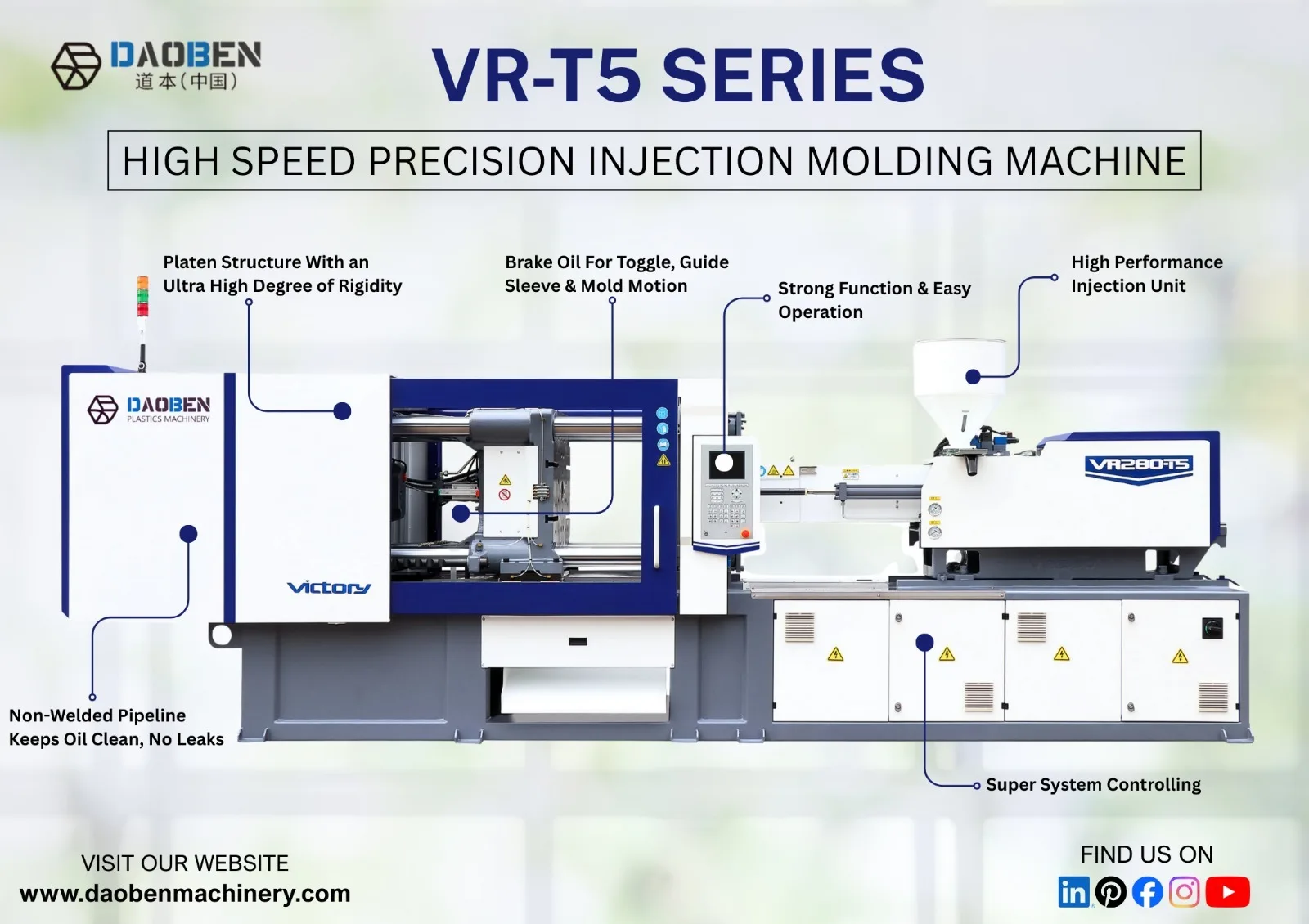
Most buyers get the price wrong. Not because they overpay — but because they focus on price first and figure out everything else second. By the time tonnage mismatches, cycle time shortfalls, or missing after-sales support become problems, the machine is already on the factory floor. These 7 questions exist to stop that from happening.
Why the Decision to Buy an Injection Molding Machine Deserves More Than a Quotation Request
When you decide to buy injection molding machine, you are not buying a commodity. You are committing capital, floor space, operator time, and production capacity to a single asset that will run — ideally — for 10 to 20 years.
A wrong choice does not just waste money upfront. It slows cycle times, increases scrap rates, drives up maintenance costs, and limits what you can produce. Procurement managers, factory engineers, and operations leads who have gone through this process once rarely make the same assumptions twice.
So before you send a single RFQ, work through the following seven questions with your team.
What Clamping Force Does Your Product Actually Need?
Tonnage is the most misunderstood spec in injection molding machine selection. Many buyers either guess based on part size or default to whatever their previous machine was rated at.
The right way to calculate clamping force:
Clamping force (tons) = Projected part area (cm²) × Cavity pressure (kg/cm²) ÷ 1000
For most standard thermoplastics, cavity pressure ranges from 300 to 500 kg/cm². High-viscosity materials like PC or glass-filled nylon push that figure higher.
Running a machine too close to its maximum rated tonnage accelerates wear on the tie bars and platen. Running a machine significantly under-tonnaged risks flash, short shots, and dimensional inconsistency.
Daoben Machinery produces injection molding machines from 30 tons to 4,000 tons — so whether your parts are small precision components or large automotive panels, the right tonnage exists in that range. The key is calculating it correctly before ordering.
What Materials Will You Process?
Not all plastic injection machines are built for the same resins. This is where many buyers learn an expensive lesson.
| Material | Key Machine Requirement |
| ABS, PP, PE | Standard barrel and screw configuration |
| PVC | Corrosion-resistant barrel, specific screw design |
| PC, Nylon (PA) | High-temperature barrel, pre-drying system |
| Glass-filled resins | Hardened screw and check ring |
| TPE / TPU | Low-compression screw, careful temperature control |
| LSR (liquid silicone) | Cold-runner system, specialized injection unit |
If your production line processes more than one material type, discuss multi-purpose configurations with the manufacturer before ordering. Running PC compounds through a standard ABS-configured machine shortens barrel life fast and degrades part quality.
What Is Your Target Cycle Time and Annual Volume?
A plastic injection machine that produces the right part but cannot hit your cycle time targets is not the right machine. Full stop.
Cycle time is driven by several factors:
- Injection speed and pressure — how fast melt fills the cavity
- Cooling time — the largest share of most cycles
- Clamp open/close speed — often underestimated in high-volume scenarios
- Ejection method — mechanical, hydraulic, or air
For high-volume production runs — typically above 500,000 shots per year per cavity — an all-electric or hybrid injection molding machine will outperform a hydraulic machine on both cycle time and energy cost. For heavy-wall parts or large structural components, full hydraulic systems still deliver the force and consistency needed.
Calculate your annual volume first. Then work backward to the cycle time your machine must consistently achieve. That number should drive the technical specification, not the other way around.
New Machine or Used — What Are You Actually Risking?
Used injection molding machines carry a lower sticker price. They also carry risks that are rarely visible in photographs or even short inspection visits.
Common hidden problems in second-hand machines:
- Worn tie bars and uneven platen parallelism
- Degraded hydraulic seals and contaminated fluid systems
- Barrel and screw wear beyond serviceable tolerances
- Outdated or unsupported control systems
- Missing calibration history or maintenance records
For buyers looking to scale production or maintain consistent quality for supply contracts, used machines introduce variables that are very hard to budget for. A machine that costs 30% less upfront but requires $15,000 in refurbishment work and loses 8% of cycle time efficiency is not a bargain.
New machines from a reputable manufacturer come with documented specs, factory warranty, and a known service history of zero. For professional procurement decisions, that baseline has real value.
Have You Calculated Total Cost of Ownership?
Purchase price is one line item. Total cost of ownership (TCO) covers everything the machine will cost over its working life.
| Cost Category | What to Include |
| Purchase price | Base machine, tooling compatibility, shipping |
| Installation | Foundation work, electrical, hydraulic connections |
| Energy consumption | kWh per cycle × annual shots |
| Maintenance | Scheduled service, consumable parts (seals, screw tips) |
| Downtime cost | Lost production hours per unplanned stop |
| After-sales support | Response time, parts availability, technician access |
| End-of-life value | Resale or trade-in value after depreciation |
All-electric injection machines typically consume 30–60% less energy than equivalent hydraulic models. Over a 10-year lifespan, that energy delta can exceed the original price difference between the two configurations.
When you buy injection molding machine from a manufacturer with a strong spare parts network and fast technical response, downtime risk — often the largest hidden cost — drops significantly.
How Do You Vet an Injection Molding Machine Supplier?
The machine is only as reliable as the company that builds and supports it. This is especially true for buyers sourcing from overseas manufacturers, where lead times, communication gaps, and parts logistics add complexity.
A practical supplier vetting checklist:
- Manufacturing certifications — CE, ISO 9001, and relevant regional standards
- Production capacity — Can they fulfill your volume within your timeline?
- References and case studies — Have they supplied to your industry or region before?
- Test run documentation — Will they provide FAT (Factory Acceptance Testing) data?
- After-sales infrastructure — Local service agents, spare parts warehouse, remote diagnostics
- Warranty terms — What is covered, for how long, and what is the claim process?
- Communication responsiveness — How fast do they respond to a technical question before the sale? That speed usually holds after it too.
Buying direct from the original manufacturer, rather than through a trading company or reseller, removes one layer of markup and one layer of communication delay. If a technical problem surfaces post-installation, direct manufacturer access matters enormously.
Does the Machine Fit Your Factory Infrastructure?
This question gets skipped more often than any other, and it causes some of the most expensive problems.
Before finalizing a machine specification, confirm:
- Floor load capacity — Large machines, especially in the 500–4000 ton range, require reinforced concrete foundations
- Power supply — Three-phase voltage, amperage draw, and transformer capacity
- Cooling water supply — Flow rate, pressure, and temperature requirements for the mold and hydraulic system
- Ceiling height and door width — Critical for installation and future mold changes
- Compressed air — Required for ejection systems, purging, and some auxiliary functions
A machine that arrives and cannot be installed on schedule because the electrical supply is undersized costs more than just the delay. Procurement and engineering teams should align on infrastructure requirements in parallel with the machine specification — not after the order is placed.
Buying Direct From the Manufacturer: Why It Changes the Economics
When you buy injection molding machine through a trading company or regional distributor, you are paying a margin on top of the factory price. In many cases, that margin ranges from 10% to 25% — sometimes higher on low-volume custom orders.
More importantly, you are also adding a communication layer between yourself and the engineers who built the machine. When a technical question arises during installation or commissioning, that layer slows everything down.
Buying factory-direct means:
- Lower per-machine cost — No trader margin inflates the quote
- Direct engineering support — Questions go to the people who designed the machine
- Custom specification flexibility — Modifications are discussed with engineers, not relayed through a sales intermediary
- Faster parts supply — Spare components ship from the factory, not from a third-party depot
- Transparent production timeline — You see exactly where your order is in the manufacturing queue
For procurement managers sourcing machines at scale — whether one unit for a new line or ten for a full facility expansion — this difference compounds quickly.
Why Daoben Machinery?
Daoben Machinery is a professional plastic injection molding machine manufacturer based in China. The full production range covers 30 tons to 4,000 tons, serving industries including automotive, packaging, electronics, consumer goods, spa components and construction materials.
Every machine leaves the factory with documented FAT records, CE certification options, and a structured after-sales service program that includes remote diagnostic support, on-site commissioning assistance, and a dedicated spare parts supply chain.
Whether you are sourcing a single-cavity precision machine for technical components or a multi-cavity high-speed line for packaging production, Daoben’s engineering team works directly with buyers to match machine specifications to production requirements — before the order is placed.
FAQs: Buy Injection Molding Machine
Q1: What is the minimum order quantity when buying direct from a manufacturer like Daoben? Most direct manufacturers, including Daoben, accept single-unit orders. There is no minimum quantity requirement. Bulk orders across multiple machine models can be quoted together for consolidated shipping and pricing advantages.
Q2: How long does it typically take to receive an injection molding machine after placing an order? Lead times vary by model and customization level. Standard configurations typically ship within 30–60 days from order confirmation. Custom specifications — modified barrel lengths, special control systems, non-standard tie bar spacing — may extend lead time to 60–90 days. Your manufacturer should confirm in writing.
Q3: Can I request a Factory Acceptance Test (FAT) before the machine ships? Yes. Most reputable plastic injection machine manufacturers offer FAT as a standard part of the delivery process. FAT documentation includes clamping force verification, injection unit performance data, and control system calibration records. Remote video-assisted FAT is also available for buyers who cannot travel to the factory.
Ready to place a well-informed order?
You now know the questions. The next step is getting answers specific to your production requirements.
Daoben Machinery’s engineering team reviews every inquiry directly — no intermediaries, no generic quotes. Tell us your part dimensions, target material, annual volume, and any infrastructure constraints, and we will recommend the right machine from our 30-ton to 4,000-ton range.
👉 Submit your inquiry at daobenmachinery.com — factory-direct pricing, factory-direct support.