ThriveCart Review 2026: Is the Lifetime Deal Still Worth $495?
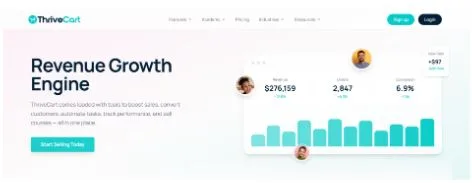
ThriveCart has built a reputation as one of the most conversion-focused checkout platforms in the digital product space, and its lifetime pricing model keeps pulling entrepreneurs away from monthly subscription tools that quietly drain bank accounts year after year.
But a lot changed in 2025 and 2026, including a major pricing restructure that most reviews haven’t caught up with yet.
This ThriveCart review breaks down everything: what it does, what it costs now, what’s changed, what it does better than competitors, where it falls short, and who should actually buy it.
What Is ThriveCart?
ThriveCart is a shopping cart and checkout platform built specifically to help digital entrepreneurs, course creators, coaches, and eCommerce sellers maximize revenue from every transaction.
Josh Bartlett founded the platform in 2016, and it has since grown to serve over 50,000 active users across the globe.
Where most platforms try to be everything, email marketing, website builder, CRM, checkout, course hosting, ThriveCart focuses almost entirely on one thing: turning more visitors into paying customers at the checkout stage.
That focused approach shapes every feature on the platform, from the drag-and-drop checkout builder to the one-click upsell flows and built-in A/B testing tools.
Alongside its core checkout toolset, ThriveCart also includes a built-in course platform called ThriveAcademy (which replaced the older ThriveCart Learn for all new accounts created after May 19, 2026).
This makes it possible to both sell and deliver digital products from a single platform without paying for a separate LMS.
ThriveCart works best for:
- Digital product sellers (ebooks, templates, presets, downloads)
- Online course creators who want checkout optimization paired with course delivery
- Coaches and consultants selling one-on-one or group programs
- Membership site owners managing recurring billing
- Affiliate marketers who want a built-in affiliate center
- Entrepreneurs running physical product businesses alongside digital offerings
ThriveCart is not the right fit for:
- Businesses that need a full website builder in the same tool
- Creators who need built-in email marketing and automation
- Anyone who wants a free plan or a no-commitment monthly option
- Beginners who aren’t sure whether they’ll generate sales and want to test the water before spending $495
ThriveCart Pricing in 2026: What You Actually Pay
This is where most ThriveCart reviews go wrong, either because they’re outdated or because they skip the details that matter most before purchase.
Standard Plan – $495 (One-Time, Truly Lifetime)
The Standard plan costs $495 as a one-time payment and gives you permanent access to ThriveCart’s core checkout tools with no recurring fees of any kind. This is the only truly lifetime tier in ThriveCart’s current pricing structure.
You pay once, and you own it. No annual renewals, no monthly creep, no surprise billing on your anniversary date.
What Standard includes:
- Unlimited checkout pages
- One-click upsells and downsells
- Order bumps at checkout
- A/B split testing
- Four payment structures (one-time, subscription, split-pay, pay-what-you-want)
- Payment gateways: Stripe, PayPal, Apple Pay, Google Pay, Authorize.net
- Abandoned cart recovery automation
- 40+ native integrations (Zapier, ActiveCampaign, Mailchimp, Flodesk, and more)
- ThriveAcademy (basic LMS, included free)
- 0% transaction fees (payment processor fees still apply)
- 14-day refund policy
Pro+ Plan – $790 Year 1, then $295/Year from Year 2
This is the part most reviews miss entirely.
In April 2025, ThriveCart replaced its old $195 one-time Pro upgrade with Pro+, which now costs $295 per year starting from year two.
The Year 1 cost is $790 total ($495 Standard + $295 first-year Pro+ access). From Year 2 onward, the $295 annual fee keeps recurring.
Features locked behind Pro+ are not minor add-ons, they’re tools most serious sellers genuinely need:
What Pro+ adds:
- Affiliate management center (recruit, manage, and pay affiliates)
- Automatic sales tax calculation (critical for EU sellers and US tax compliance)
- Subscription dunning (auto-recovery of failed recurring payments)
- Custom checkout domain support
- Advanced reporting and analytics
- Multi-user account access
- JV contracts for revenue-sharing partnerships
If you plan to run an affiliate program, sell subscriptions, or have EU customers, Pro+ is not optional, it’s a requirement. That changes the real cost calculation significantly:
| Timeline | Standard Only | With Pro+ |
| Year 1 | $495 | $790 |
| Year 2 | $495 | $1,085 |
| Year 3 | $495 | $1,380 |
| Year 5 | $495 | $1,970 |
At Year 5, a Standard-only user has spent $495 total. A Pro+ user has spent $1,970 total. That’s a meaningful difference, and one worth understanding before purchase.
Ultimate Bundle – $985 (Partial Lifetime)
The Ultimate Bundle combines Standard (lifetime), Pro+ (lifetime access in Year 1, then $295/year from Year 2), and Learn+ (lifetime LMS upgrade) into one package.
It offers the deepest feature set ThriveCart sells, including advanced course analytics, student tagging, content bundles, team accounts, and gated access levels.
The $985 price point is competitive if you were going to buy all three components separately, but note that Pro+ still requires the $295 annual renewal from Year 2 regardless of which package you started with.
Comparison: ThriveCart vs Monthly Subscription Alternatives
To understand ThriveCart’s value, compare what monthly competitors charge for similar functionality:
| Platform | Monthly Cost | Annual Cost | Transaction Fees |
| ThriveCart Standard | $0 (after $495) | $0 | 0% platform fee |
| ThriveCart with Pro+ | ~$25/month equiv. | $295 | 0% platform fee |
| SamCart Launch | $99/month | $1,188/year | 0% |
| SamCart Scale | $199/month | $2,388/year | 0% |
| Kajabi Basic | $149/month | $1,788/year | 0–0.5% |
| Kartra Starter | $119/month | $1,428/year | 0% |
By Year 3, even ThriveCart with Pro+ costs less than one year of SamCart Scale. For someone who plans to use the platform for five or more years, the Standard-only plan at $495 total is nearly impossible to beat on pure cost.
ThriveCart’s Core Features: A Detailed Breakdown
High-Converting Checkout Pages
ThriveCart’s checkout builder uses a drag-and-drop editor requiring zero coding knowledge. Most users go from account creation to a live product page in under one hour. The builder offers three checkout display formats:
- Embeddable checkout — drop directly onto any page of your existing website
- Popup checkout — triggered by a button click, keeps visitors on your page
- Full page checkout — a dedicated standalone checkout URL
Each format is fully mobile-optimized, which matters because a growing percentage of digital product purchases now happen on phones.
You can add progress bars, countdown timers, testimonials, guarantee badges, FAQ sections, and feature callouts directly into the checkout page without touching code.
Page SEO settings are also built in, letting you customize the meta title, description, and URL slug for each checkout page — a small but useful feature that many cart builders leave out entirely.
One-Click Upsells, Downsells, and Order Bumps
These three features sit at the core of ThriveCart’s pitch — and with good reason. They’re the most direct levers for increasing average order value without increasing traffic.
Order bumps appear on the checkout page itself, right before the customer completes their purchase. A simple checkbox adds the bonus product to their cart. This is the lowest-friction upsell available because the customer is already mid-purchase with their card details entered.
One-click upsells appear after the initial purchase completes, offering an additional product that can be added with a single click, no re-entering payment information required. Because the transaction is already approved, the conversion rate on these offers tends to run significantly higher than cold product sales.
Downsells trigger when a customer declines an upsell, offering a lower-priced alternative or a stripped-down version of the same offer. This recovers revenue from potential no-sales that would otherwise leave the funnel empty-handed.
ThriveCart users have reported doubling or even quadrupling conversion rates after adding properly structured bump offers and upsell sequences to their checkout flows.
A/B Split Testing
ThriveCart lets you test two versions of a checkout page against each other simultaneously, a feature notably absent from many competing platforms. You can split-test:
- Two different bump offers against each other
- Different price points for the same product
- Checkout page layouts and designs
- Payment option presentations (showing subscriptions vs one-time pricing)
- Headline copy and offer framing
The platform tracks which version converts at a higher rate and gives you a clear statistical winner. For sellers doing any meaningful volume, this feature alone can deliver enough extra revenue to cover the cost of the platform within weeks.
Payment Flexibility
ThriveCart supports four distinct payment structures for every product:
- One-time payment — standard single charge
- Subscription/recurring — weekly, monthly, quarterly, or annual billing
- Split-pay — break a single purchase into two or three automatic installments
- Pay-what-you-want — customer sets the price above your floor (useful for donations and variable-value products)
You can offer multiple payment options on the same checkout page without creating separate pages for each pricing structure.
A customer choosing between a $297 one-time payment and three installments of $107 can select their preference from one page.
Supported payment gateways:
- Stripe (including Apple Pay and Google Pay)
- PayPal (including one-click upsells through PayPal — a ThriveCart-specific capability that most competitors don’t support)
- Authorize.net
ThriveCart supports 17 currencies, making it usable for international sellers without requiring separate accounts or tools per region.
Affiliate Management System
The built-in affiliate center (Pro+ only) lets you recruit, manage, track, and pay affiliates entirely within ThriveCart, without needing a separate affiliate platform like Refersion, Post Affiliate Pro, or ShareASale.
What the affiliate system includes:
- Custom commission rates per product (percentage or flat amount)
- Instant or delayed payout options via PayPal
- Unique affiliate tracking links for each partner
- Affiliate performance dashboard with clicks, conversions, and earnings
- Cookie duration control
- Behavior rules — automatically adjust an affiliate’s commission if their refund rate exceeds a threshold you set
- Exclusive bonus delivery to affiliates’ referrals as a conversion incentive
For digital product sellers, affiliates are one of the highest-leverage growth channels available.
Having all affiliate operations inside your checkout platform (rather than bridged through a third-party tool via Zapier) removes a significant source of technical complexity.
Abandoned Cart Recovery
When a potential buyer enters their email on a ThriveCart checkout page but doesn’t complete the purchase, ThriveCart captures that email and tags the contact automatically. This triggers your connected email marketing platform to send a recovery sequence, a series of follow-up emails designed to bring the visitor back to complete the purchase.
This works with all major email tools: ActiveCampaign, Mailchimp, ConvertKit, Flodesk, Mailerlite, and anything Zapier connects. The setup takes about 10 minutes and recovers a meaningful percentage of abandoned transactions that would otherwise be permanently lost revenue.
ThriveAcademy: The New LMS (Important 2026 Update)
This is the biggest product change in ThriveCart’s recent history.
ThriveCart Learn, the original built-in course platform, is being fully retired for all users at the end of 2026. All accounts created after May 19, 2026 already run on ThriveAcademy, ThriveCart’s new learning management system.
ThriveAcademy goes beyond simple course delivery and adds community-based content features, making it a more complete student experience platform than the original Learn tool. Existing users are encouraged to migrate from Learn to ThriveAcademy now rather than waiting for the forced cutover at year-end.
ThriveAcademy capabilities include:
- Module and lesson creation with multiple content types (video, audio, text, downloads)
- Drip-feeding with flexible scheduling (days after enrollment, specific dates, or completion triggers)
- Student progress tracking
- Community features for discussion and engagement
- Multiple layout options for the student dashboard
- Cross-sell opportunities surfaced directly inside the student area
The basic ThriveAcademy (replacing basic Learn) is included with every Standard plan. Advanced LMS features require the Learn+ upgrade, which is included in the Ultimate Bundle or available as a $395 one-time add-on.
ThriveCart Integrations: 40+ Native Connections
ThriveCart integrates directly with the tools most digital product businesses already use, without requiring Zapier as a middleman for the most common connections:
Email Marketing:
ActiveCampaign, Mailchimp, ConvertKit (Kit), Flodesk, Drip, AWeber, Mailerlite, GetResponse, Infusionsoft (Keap), Ontraport
Membership Platforms:
MemberPress, Memberful, AccessAlly, S2Member, WishList Member, aMember
Webinar Tools:
Demio, WebinarJam, EverWebinar, Zoom
Course Platforms:
Teachable, Thinkific, Kajabi, LearnDash (as an external delivery option if you prefer to use a dedicated LMS alongside ThriveCart’s checkout)
Fulfillment and Physical Products:
Printful, Shippo, ShipStation (for physical product fulfillment)
Other:
Zapier (connects to 5,000+ additional apps), Slack, Google Analytics, Facebook Pixel
GDPR Compliance:
For European sellers, ThriveCart includes a GDPR marketing consent checkbox, a cookie notification bar, and data anonymization features, reducing legal exposure without requiring a separate consent management tool.
ThriveCart Pros and Cons
What ThriveCart Gets Right
One-time pricing on the Standard plan is genuinely unique. Most SaaS tools in this category charge $99–$299 per month indefinitely. Paying $495 once and owning the core platform forever is a pricing model that almost no competitor matches.
Checkout conversion focus is deep. Order bumps, one-click upsells, A/B split testing, embeddable checkout, multiple payment structures, and abandoned cart recovery all coexist in one platform. Most tools offer two or three of these; ThriveCart includes all of them.
Zero platform transaction fees. You pay payment processor fees (typically 2.9% + $0.30 via Stripe) but ThriveCart adds nothing on top. Compare this to Kajabi, which charges 0.5–5% platform fees depending on your tier and payment processor.
Quick setup. The drag-and-drop builder genuinely requires no technical background. Users consistently report going from account creation to a live, functioning checkout within one hour of signing up.
Built-in affiliate center eliminates a separate tool. For sellers who run affiliate programs, not needing Refersion or ShareASale saves $50–$200 per month immediately.
14-day refund policy is honest and accessible. With no free trial available, the 14-day money-back guarantee functions as a low-risk evaluation window.
What ThriveCart Gets Wrong
Pro+ is no longer truly lifetime. The shift from the old $195 one-time Pro upgrade to the new $295/year Pro+ recurring fee changed the total cost calculation significantly. Sellers who need affiliate management, automatic sales tax, or subscription dunning are now committing to an ongoing annual cost — which ThriveCart’s marketing doesn’t emphasize as clearly as it should.
No built-in email marketing. ThriveCart integrates with email tools but doesn’t include one. You’re adding $29–$59/month for a standalone email platform on top of your ThriveCart investment.
No website builder. ThriveCart creates checkout pages and course/community delivery spaces. It doesn’t build homepages, blog sections, or general-purpose web pages. You still need a separate website.
Limited design templates. Compared to dedicated funnel builders like ClickFunnels or dedicated checkout platforms like SamCart, ThriveCart’s template library is smaller. Many users supplement with third-party ThriveCart template packs, which add cost.
Support is email-only. There’s no live chat or phone support. ThriveCart does maintain a knowledge base and tutorial library, and their user community is active — but if you hit a technical problem on launch day, email support with a response window of hours is the only official channel.
Upfront cost can sting for beginners. $495 is meaningful money if you haven’t proven your product will sell yet. Spending that before your first sale creates real financial pressure, even if the long-term value is strong.
ThriveCart vs The Competition
ThriveCart vs SamCart
SamCart starts at $99/month and scales up to $199/month for its Scale plan. At those prices, a two-year SamCart Scale subscription costs $4,776 — nearly ten times ThriveCart Standard’s one-time cost. SamCart offers a cleaner design aesthetic and stronger template variety, but ThriveCart wins significantly on long-term pricing and matches or beats SamCart on conversion features like order bumps, upsells, and A/B testing.
Bottom line: SamCart is worth it if you need the aesthetics and can absorb the monthly fee. ThriveCart wins on lifetime value.
ThriveCart vs Kajabi
Kajabi positions itself as an all-in-one platform — website, email marketing, courses, community, checkout. Starting at $149/month ($1,788/year), it includes tools that ThriveCart doesn’t: a full website builder, built-in email automation, podcast hosting, and a robust community platform.
ThriveCart beats Kajabi on checkout conversion tools, affiliate management depth, payment flexibility, and cost. Kajabi beats ThriveCart on all-in-one functionality, design polish, and community features.
Many serious digital product sellers use both: ThriveCart handles checkout optimization and affiliate management, while Kajabi handles course delivery and community. The combination gives you the best of each platform’s strengths.
ThriveCart vs Kartra
Kartra is a more direct all-in-one alternative, starting at $119/month with email automation, landing pages, funnels, video hosting, and a full course delivery system built in. Like Kajabi, it offers features ThriveCart doesn’t attempt to include.
Where ThriveCart wins: checkout depth, one-time pricing on Standard, and a simpler learning curve specifically for the checkout and payment management workflow. Where Kartra wins: integrated automation, behavioral email sequences, and a more complete marketing ecosystem in a single tool.
Quick comparison:
| Feature | ThriveCart | SamCart | Kajabi | Kartra |
| Starting Monthly Cost | $0 (after lifetime) | $99/month | $149/month | $119/month |
| Transaction Fees | 0% | 0% | 0–0.5% | 0% |
| Order Bumps | Yes | Yes | Limited | Yes |
| One-Click Upsells | Yes | Yes | Limited | Yes |
| A/B Split Testing | Yes | Yes | No | Yes |
| Built-in Email Marketing | No | No | Yes | Yes |
| Website Builder | No | No | Yes | Yes |
| Built-in Affiliate System | Yes (Pro+) | Yes | Basic | Yes |
| Course Platform Included | Yes (ThriveAcademy) | No | Yes | Yes |
| Free Trial | No (14-day refund) | 7 days | 30 days | 30 days |
Who Should Buy ThriveCart in 2026?
ThriveCart Standard ($495) is an obvious buy if:
- You already have an email marketing tool and a website, and just need a powerful checkout layer
- You sell digital products, templates, ebooks, or services and want to maximize conversion without paying $100+ per month
- You expect to use the platform for two or more years (the math overwhelmingly favors the lifetime deal)
- You don’t need affiliate management, sales tax automation, or custom checkout domains
ThriveCart with Pro+ ($790 Year 1, $295/year after) makes sense if:
- You plan to run an active affiliate program
- You sell subscriptions and need reliable dunning to recover failed payments
- You sell to EU customers and need automatic VAT compliance
- You need custom domains on your checkout pages for branding purposes
Consider an alternative if:
- You’re just starting out and haven’t made your first sale yet — a tool like Gumroad (free with 10% fee) or Payhip (free plan available) lets you prove the concept before committing $495
- You want everything in one place including email, website, and community — Kajabi or Kartra may serve you better despite the higher monthly cost
- You need phone or live chat support — ThriveCart’s email-only support model is a genuine limitation for users who run time-sensitive launches
How To Get the Most Out of ThriveCart?
Once you’re inside the platform, a few setup choices will determine how much of ThriveCart’s conversion potential you actually realize:
Set up an order bump on every product immediately. Even a simple $17 or $27 add-on relevant to your main product can add meaningful revenue per sale. The first week after setting up a bump offer almost always shows a measurable increase in average order value.
Connect your email tool before going live. ThriveCart’s abandoned cart recovery only works if your email integration is active. Many users launch, generate abandoned carts, and then realize their recovery sequence never fired because the integration wasn’t complete.
Use split-pay options on higher-ticket offers. Giving buyers the option to pay in two or three installments consistently increases conversion rates on products priced above $197. You capture buyers who want the product but aren’t comfortable with the full charge today.
Set up your affiliate program before you need it. Building the program, creating affiliate materials, and testing the tracking links before reaching out to potential partners saves significant time when you’re ready to launch an affiliate-driven promotion.
Migrate to ThriveAcademy now if you’re an existing Learn user. ThriveCart Learn retires fully at the end of 2026. Getting your courses moved to ThriveAcademy while it’s not urgent, rather than under deadline pressure, gives you time to test the new environment and update any student-facing links without disruption.
ThriveCart Frequently Asked Questions
Is there a free trial for ThriveCart?
No. ThriveCart doesn’t offer a free trial. All purchases come with a 14-day money-back guarantee, giving you two weeks to test the platform with your own products before committing.
Does ThriveCart charge transaction fees?
ThriveCart charges zero platform transaction fees. Standard payment processor fees apply, typically 2.9% + $0.30 per transaction through Stripe, or similar rates through PayPal and Authorize.net.
Is ThriveCart’s lifetime deal still available?
As of June 2026, yes. ThriveCart has offered the Standard plan at $495 as “launch pricing” since approximately 2018. The company has indicated the price will eventually increase or move to a monthly subscription model, but no specific end date has been confirmed.
Can ThriveCart replace Teachable or Thinkific for course hosting?
It depends on your needs. ThriveAcademy (ThriveCart’s new LMS) handles course delivery, community features, and student progress tracking. For simple to moderately complex courses, it’s more than sufficient. For advanced learning features, detailed quiz analytics, certificates, SCORM content, or cohort-based structures — a dedicated LMS like Thinkific or Teachable may serve better alongside ThriveCart’s checkout.
What happened to ThriveCart Learn?
ThriveCart Learn is being retired. New accounts created after May 19, 2026 run on ThriveAcademy automatically. Existing Learn users are encouraged to migrate to ThriveAcademy before the full retirement at the end of 2026.
Does ThriveCart work for physical products?
Yes. ThriveCart supports physical product sales and integrates natively with Printful, Shippo, and ShipStation for fulfillment. You can sell physical goods, digital products, or combinations of both from the same account.
What support options does ThriveCart offer?
Email-based support, a knowledge base, a video tutorial library, and an active user community. No live chat and no phone support are available at any plan level.
ThriveCart Review Verdict: Rating Breakdown
| Category | Rating | Notes |
| Checkout Conversion Tools | 9/10 | Best-in-class order bumps, upsells, A/B testing |
| Pricing Value | 8/10 | Standard is exceptional value; Pro+ recurring fees lower the score |
| Ease of Use | 8/10 | Intuitive drag-and-drop, minor learning curve on advanced features |
| Integrations | 8/10 | 40+ native connections cover most common tools |
| Course/LMS Capability | 7/10 | ThriveAcademy is solid; not a replacement for dedicated LMS platforms |
| Support Quality | 6/10 | Email-only is a real limitation during time-sensitive situations |
| Design Templates | 6/10 | Functional but limited compared to dedicated funnel builders |
| Overall | 7.8/10 | Strong buy for established digital product sellers; cautious buy for beginners |
Final Verdict: Should You Buy ThriveCart in 2026?
ThriveCart earns its reputation. For any digital product seller who has already validated their offer and is focused on increasing conversions from existing traffic, the Standard plan at $495 is one of the most cost-effective investments in the online business tool stack.
The honest caveat that too many reviews skip: if you need affiliate management, automatic sales tax, or subscription dunning, which most serious sellers eventually do, budget for Pro+ at $295/year on top of the Standard purchase. The “lifetime deal” framing applies fully only to the Standard tier.
With ThriveAcademy replacing ThriveCart Learn as the new LMS, the platform moves in a direction that makes course delivery and community management more capable than before, strengthening ThriveCart’s position as a genuine all-in-one tool for sellers who prioritize checkout performance above all else.
If you’re building a long-term digital product business and you’re tired of paying $100–$200 per month to a checkout platform that offers roughly the same features, ThriveCart Standard is very likely worth the upfront investment. Buy it, set up a product, add an order bump, connect your email tool, and let it run, the platform doesn’t need to be managed. It just needs to be set up well once.