Posted on

Fora Viv Officially Launches, Bringing Personalized Telehealth and Wellness Treatments Online 

New telehealth platform connects patients with licensed healthcare providers and provides convenient access to personalized treatment options across weight management, sexual health, wellness, and skincare. 

IRVINE, Calif. – Fora Viv, a new telehealth and wellness platform designed to make personalized care more accessible and convenient, today announced its official launch in the United States. 

Fora Viv provides a streamlined online experience that connects eligible patients with licensed healthcare providers and treatment options based on their individual health needs and goals. Through the platform, patients can explore available treatments, complete a medical intake, and receive an evaluation from a licensed provider to determine whether treatment is appropriate for them. 

Built around the belief that healthcare should feel personal, accessible, and convenient, Fora Viv aims to make it easier for people to explore their options and access care that supports their individual health and wellness goals. 

At launch, Fora Viv offers treatment options across several areas of health and wellness, including weight management, sexual health, wellness, and skincare. Available options include GLP-1 medications for eligible patients, sexual health treatments, wellness therapies, and personalized treatment programs based on provider evaluation. 

The Fora Viv experience is designed to take place primarily online. Patients begin by selecting a treatment or health goal and completing a medical intake. A licensed provider then reviews the patient’s information and determines eligibility. Depending on the treatment, patient location, and applicable requirements, the evaluation may be completed asynchronously or through a consultation. 

For eligible patients who are prescribed treatment, Fora Viv provides a convenient path from evaluation to ongoing care through one streamlined platform. Multi-month treatment options are also available for select treatments, providing additional flexibility based on each patient’s individual care plan. 

With its official launch, Fora Viv plans to continue expanding its treatment offerings while building a modern telehealth experience centered on personalized care, convenience, and access. 

To learn more about Fora Viv and explore available treatment options, visit https://foraviv.com/

About Fora Viv 

Fora Viv is a U.S.-based telehealth and wellness platform connecting eligible patients with licensed healthcare providers and personalized treatment options across weight management, sexual health, wellness, skincare, and other areas of health and wellness. Treatment availability and eligibility vary and are determined by licensed healthcare providers. 

Posted on

Key Principles for Selecting the Right Lighting Fixtures in Interior Design

Lighting is one of the most essential components of interior design, playing a decisive role in how space, color, and texture are perceived. Beyond its primary function of providing illumination, carefully selected lighting serves as an architectural anchor that defines the character of a room. Whether designing a residential home or a commercial space, choosing the right fixture requires balancing aesthetic appeal with practical functionality.
Among various lighting options, central ceiling fixtures remain the most effective way to establish primary illumination while creating a strong visual focal point. However, homeowners and designers often face challenges when deciding on scale, placement height, and design alignment for their space.

Calculating Proportions and Scale

A common mistake in lighting layout is misjudging the scale of a central fixture relative to the room’s dimensions. A fixture that is too small can appear lost in a large living area, whereas an oversized piece can overwhelm a room with low ceilings.
To determine a balanced diameter, interior designers frequently use a simple guideline: add the length and width of the room in feet, and use that total figure in inches as a starting reference for the fixture’s diameter. For instance, a 12 by 18-foot room typically suits a centerpiece measuring around 30 inches in width. Exploring diverse options across all chandeliers collections allows buyers to compare sizes and styles that match their specific spatial requirements.

Hanging Height and Placement Guidelines

Maintaining proper vertical clearance ensures both safety and optimal light distribution. For general living areas, the bottom of a hanging fixture should ideally sit at least 7 feet (210 cm) above the floor to allow comfortable movement underneath. In contrast, when positioning fixtures directly over dining tables or kitchen islands, a lower clearance of 30 to 36 inches above the surface creates a warm, intimate atmosphere without obstructing sightlines across the table.

Matching Style to Interior Architecture

Selecting a design that complements the overarching decor style ensures visual harmony throughout the home:
• Modern and Minimalist Interiors: Sleek geometric shapes, clean metal finishes, and subtle glass accents complement modern architectural lines without adding visual clutter.
• Classic and Transitional Settings: Intricate crystal arrangements, multi-tiered arms, and warm brass elements add grandeur and elegance. Incorporating statement luxury round chandeliers into formal dining rooms or entry foyers elevates the ambiance while providing abundant ambient light.

Color Temperature and Dimmability

The mood of a space is heavily influenced by color temperature, measured in Kelvin (K). Warm light (2700K–3000K) creates an inviting, cozy atmosphere ideal for living rooms and dining spaces. Integrating dimmable controls further allows residents to adjust brightness levels seamlessly throughout the day, transitioning from functional daytime lighting to soft evening illumination.

Frequently Asked Questions (FAQ)

1. Can hanging light fixtures be installed on sloped or vaulted ceilings?

Yes, most modern fixtures with chain or cord suspensions are naturally compatible with sloped ceilings. For rigid rod installations, sloped-ceiling adapters are usually required.

2. What is the difference between ambient and task lighting?

Ambient lighting provides general, overall illumination across a room, whereas task lighting directs focused light onto specific work areas, such as kitchen counters or reading nooks.
Ultimately, successful lighting design combines technical planning with personal style. By considering room proportions, clearance heights, and light output, you can create a well-lit environment that feels both functional and inviting.

Posted on

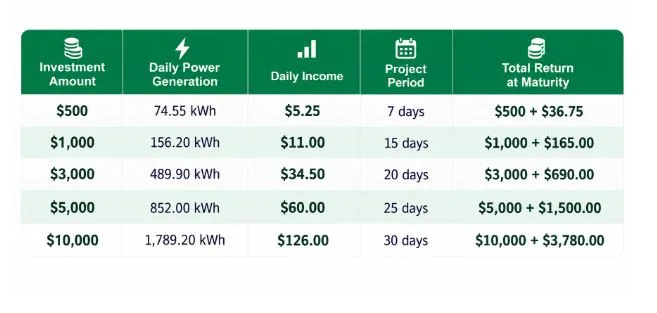
Lake Energy: Helping Individual Investors Generate Sustainable Returns Through Solar Projects

Global energy systems are undergoing a long-term and profound transformation.

Climate change and global warming are accelerating the world’s transition from traditional fossil fuels to clean energy sources such as solar, wind, hydropower, and energy storage. At the same time, the development of artificial intelligence, data centers, electric vehicles, advanced manufacturing, and the electrification of society is creating increasingly enormous demand for electricity.

According to forecasts by the International Energy Agency (IEA), renewable energy is expected to account for approximately 43% of global electricity supply by 2030. At the same time, renewable energy is becoming a core source of new electricity supply worldwide.

About Lake Energy

Lake Energy was founded in Singapore in 2020 and is dedicated to the development, construction, and operation of renewable energy infrastructure worldwide.

After years of development, the company has established a presence and participated in renewable energy power generation projects across Asia, the Americas, Africa, and other regions, with operations covering solar energy, wind power, hydropower, energy storage, and other green energy sectors.

Against the backdrop of an accelerating global energy transition, Lake Energy aims to connect renewable energy infrastructure with participants around the world through a digital platform, enabling energy projects that were previously mainly accessible to large enterprises and professional institutions to reach more users in a more convenient and digital way.

Our goal is not only to participate in the construction of more green energy infrastructure, but also to enable more people to participate in the new opportunities created by the global energy transition.

Why Green Energy?

1. Green Energy Is Everywhere

Renewable energy sources such as sunlight, wind, and water are widely available around the world.

Unlike traditional fossil fuels, which are highly dependent on reserves concentrated in specific regions, renewable energy has a much broader resource base, creating opportunities for different countries and regions to establish local energy supply systems. The United Nations has also pointed out that renewable energy resources such as solar and wind are abundant and available all around us.

2. Green Energy Is Becoming More Economical

As technologies such as solar photovoltaics, wind power, and energy storage continue to advance, the cost of renewable energy generation has fallen significantly.

Today, renewable energy has become a cost-competitive source of new electricity generation in most parts of the world. According to United Nations data, more than 90% of new renewable energy projects now generate electricity at a lower cost than fossil fuel alternatives.

3. Green Energy Creates a Healthier Environment

The development of clean energy sources such as solar and wind not only helps reduce greenhouse gas emissions but also helps reduce air pollution caused by traditional energy production.

The energy transition is therefore not only related to climate change, but is also closely connected to air quality, public health, and the future living environment.

Enabling More People to Participate in Green Energy

In the past, participating in large-scale renewable energy projects was not easy.

A solar or wind power project typically involves land, equipment procurement, engineering and construction, grid connection, electricity sales, operations and maintenance, and long-term asset management. For individuals, directly building and operating renewable energy projects involves significant barriers to entry.

Lake Energy aims to change this.

Through its digital platform, Lake Energy connects real renewable energy infrastructure with digital finance, enabling users around the world to more conveniently learn about and participate in different types of green energy projects.

Users do not need to purchase solar panels or wind power equipment themselves, nor do they need to build and operate power plants on their own. Instead, they can choose a suitable way to participate according to the specific terms of each project.

How to Participate in Green Energy Projects Through Lake Energy

Step 1: Register an Account

Visit the Lake Energy platform and create an account.

New users receive a $10 bonus upon registration.

Step 2: Choose a Green Energy Project

Users can view different types of green energy projects on the platform. Each project displays relevant project information, participation requirements, duration, and other related details.

Step 3: View Project Operations and Earnings

After a project begins, users can view the project status, progress, and related account records through the Lake Energy platform.

Earnings generated by the project will be calculated and settled according to the specific project terms, and users can view the relevant records through their accounts.

Lake Energy Platform Features

A. Simple and Efficient

Users do not need to purchase, install, or maintain complex renewable energy equipment themselves. They can learn about and participate in different types of green energy projects directly through the digital platform.

B. Focus on Security and Compliance

Lake Energy places importance on the laws and regulations of the jurisdictions where its projects are located, project operational requirements, and risk management, providing a foundation for the long-term and stable development of the platform and its renewable energy projects.

C. One-Stop Digital Management

Through the Lake Energy platform, users can centrally view project information, project status, participation records, and related earnings information, making participation in and management of renewable energy projects more convenient.

D. 24/7 Service

Lake Energy provides round-the-clock customer service, offering global users support related to accounts, projects, and platform usage.

Making the Energy Transition an Opportunity for More People

Lake Energy is committed to becoming a platform that connects renewable energy infrastructure, digital technology, and participants around the world.

We believe that the energy system of the future should not only be cleaner, but also more open.

Lake Energy aims to lower the barriers for individuals to participate in renewable energy projects, making green energy no longer a field limited to large energy companies and professional institutions, but a new infrastructure economy that more ordinary people can access and participate in.

Official Website: lakeenergy.com

Media Contact
[email protected]

Posted on

Serhiy Tokarev Explains Why AI Agents Will Not Save Business Without Process Restructuring

Autonomous AI agents are already conducting audits, negotiating deals, and managing operations. Because of this, it may seem that the corporate world has entered a new era. And this is not just short-term hype: artificial intelligence (AI) is genuinely changing the rules of doing business.

A gap is already visible between companies that are gradually integrating AI into their processes and those that still see it as an off-the-shelf solution. Serhiy Tokarev, an investor and founder of the Tokarev Foundation, explained why AI is becoming essential for business and how it should be implemented to deliver real results.

AI Should Understand Information but Not Always Act Independently

When analysing a startup, AI can become the first analyst. At Roosh, an internal assistant built on Claude ranks a long list by team excellence and market opportunity, returning a short rationale for each company. Analysts begin deeper research with the top 10 instead of checking 100 startups one by one; productivity in initial screening has increased roughly tenfold.

AI takes over the collection of basic facts and saves a significant amount of time. At the same time, Serhiy Tokarev does not rely on the model to decide where to invest. In his view, the final decision, signature, and responsibility must remain with a human.

“I doubt that human oversight of AI is only a temporary stage that will become unnecessary once this technology becomes more accurate and intelligent. According to Deloitte, 47% of corporate users have made decisions based on incorrect model outputs, while 77% of business leaders are concerned about risks associated with generative artificial intelligence. That is why neither full control nor responsibility can be handed over to an algorithm,” notes the founder of the Tokarev Foundation.

The transition of a model from reading information and preparing recommendations to taking independent action must happen only within clearly defined boundaries. Human oversight does not hinder AI. On the contrary, it is what makes the technology suitable for business.

Artificial intelligence is only one component of the entire process. Roosh’s NDA agent, for example, follows a handbook of acceptable terms, proposed changes and issues to escalate. It prepares an initial review and redline that a lawyer checks and refines, reducing processing time from about 1.5 hours to 15–20 minutes. The first deployment also showed why review matters: the agent sometimes rewrote a provision whose different wording was already acceptable. Adding more examples of valid language helped correct this.

Processes Win, Not Models

Serhiy Tokarev is convinced that access to a frontier AI model should not be considered a long-term competitive advantage. Real value comes from deep integration, evaluation systems, and proprietary industry data. Roosh’s unified LP platform built with Claude Code illustrates this: it brings fund materials and updates from more than 60 portfolio companies into one current context, reducing the time spent assembling and reconciling versions for each prospective LP conversation.

“In our portfolio companies, models do not replace teams of specialists — they help them and expand their capabilities. Some AI agents review and analyse information flows, while others synthesise research in fintech, medical technologies, and game development. Their value comes from how they work together,” says the investor.

The question is not whether AI will be able to replace people. The real question is where exactly the model is already creating measurable business value, and where the market is still selling the future instead of the present.

Posted on

How Inflation, Employment, and Interest Rates Shape the Economy

When you look at news headlines about the economy, three terms keep appearing: inflation, employment, and interest rates. These three forces are interconnected in ways that touch nearly every aspect of financial life, from the price you pay for groceries to whether you can afford a mortgage. Understanding how they work together provides clarity on why economic conditions change and what those shifts mean for households and businesses. This article explores each component individually and then examines how they interact to shape broader economic health.

What Inflation Does to the Economy

Inflation represents the rate at which the general level of prices for goods and services rises over time, reducing what your money can buy. When inflation is present, the same dollar purchases less than it did previously, affecting consumers directly at checkout counters and when paying utility bills. Inflation also influences how businesses plan investments and set prices, which in turn affects hiring decisions and wage offers. Moderate inflation is often considered normal in a growing economy, but rapid or unexpected inflation can destabilize both consumer confidence and business planning.

The sources of inflation vary. Sometimes demand for goods outpaces supply, pushing prices upward as buyers compete for limited products. Other times, rising production costs, such as higher wages or raw material expenses, lead companies to raise their prices to maintain profit margins. External shocks like supply chain disruptions or energy price spikes can also trigger inflationary pressure. When inflation accelerates beyond what workers’ wages can match, purchasing power declines and people struggle to maintain their standard of living.

How Employment Levels Drive Economic Activity

The employment rate reflects the percentage of people in the workforce who have jobs, and this metric serves as a window into overall economic health. When employment is high, more people earn income and spend money in their communities, supporting businesses and spurring growth. Conversely, when unemployment rises, consumer spending typically falls because fewer households have stable income. A strong job market encourages workers to negotiate for better pay and benefits, while a weak market gives employers more leverage in recruitment.

Employment also connects to inflation through wage pressure. When jobs are plentiful and unemployment falls, workers become scarce and employers must offer higher wages to attract talent. These higher wages increase consumer spending power, which can drive up demand for goods and services, ultimately pushing prices higher. This relationship is why economists closely monitor the unemployment rate alongside inflation figures. If joblessness drops sharply while inflation simultaneously accelerates, policymakers must carefully weigh whether to slow the economy to combat rising prices or maintain supportive policies to protect employment.

The Role of Interest Rates in Economic Balance

Interest rates are the cost of borrowing money, set primarily by central banks and influenced by market conditions. When a central bank raises interest rates, borrowing becomes more expensive for both consumers and businesses, making mortgages, auto loans, and business credit lines less attractive. This reduced demand helps cool an overheated economy and can bring inflation under control. Conversely, when interest rates fall, borrowing becomes cheaper, encouraging spending and investment that can stimulate growth during sluggish periods.

Interest rates create a powerful transmission mechanism through the economy. Businesses consider prevailing rates when deciding whether to build new facilities, purchase equipment, or hire workers, while consumers factor rates into decisions about buying homes or starting ventures. Rising rates can be painful for borrowers with existing debt, but they benefit savers who earn more on deposits and bonds. Financial planners who evaluate borrowing and saving strategies for clients rely on a thorough understanding of the economy and interest rates to guide sound recommendations. The challenge for policymakers is setting rates at levels that promote growth without allowing inflation to spiral out of control.

How These Three Forces Interact

Understanding each of these elements separately is helpful, but their interaction creates the full picture of economic dynamics. A rising employment rate increases wage pressure and consumer demand, which can trigger inflation. If inflation climbs too high, the central bank typically raises interest rates to cool things down, making borrowing expensive and reducing business investment and consumer spending. This sequence illustrates a classic economic cycle where the three forces amplify or dampen one another in turn.

The interconnections also mean that policy decisions in one area ripple through the others. When a central bank raises interest rates to fight inflation, it intentionally makes borrowing harder, knowing this will slow hiring and reduce job growth. Similarly, government decisions to provide stimulus payments or unemployment benefits affect both spending and employment simultaneously. The goal is achieving steady employment, controlled inflation, and interest rates that support growth without excessive risk. Reaching this balance requires careful analysis and regular adjustments as new data arrives.

Indicators That Show These Forces at Work

Economists and investors watch specific data releases to track how inflation, employment, and interest rates are moving. Monthly jobs reports show how many new positions were created and what the unemployment rate is, while inflation data from price indexes reveals whether purchasing power is eroding. Central banks publish interest rate decisions and economic projections, telegraphing their intentions to the broader market. Consumer confidence surveys measure how optimistic people feel about their financial situations, often reflecting all three forces simultaneously.

Real-world examples illustrate why monitoring these indicators together matters. If a jobs report shows significant new hiring while inflation data simultaneously accelerates, investors might anticipate that the central bank will raise interest rates soon to prevent overheating. This expectation alone can move stock and bond markets before any official rate change occurs. If unemployment climbs sharply while inflation remains stubbornly high, policymakers face a situation where traditional solutions to one problem worsen the other. These scenarios confirm why examining employment, inflation, and interest rates as a group provides better economic insight than relying on any single metric in isolation.

Conclusion

Inflation, employment, and interest rates are three core forces that determine whether an economy grows steadily or experiences turbulence. Inflation erodes purchasing power and influences consumer and business behavior. Employment reflects economic health and generates the demand that drives production and profit. Interest rates serve as the central bank’s primary tool for steering the economy toward stability and growth. These three elements interact constantly, with changes in one triggering responses in the others. By understanding how they work together, you gain insight into economic news and develop a clearer picture of what shifting conditions mean for your own financial planning and decision-making.

Posted on

How Industrial CT Scanning Reveals Hidden Flaws Inside Parts

Manufactured parts can pass visual inspection while concealing voids, cracks, loose inserts, or dimensional errors. Industrial computed tomography (CT) scanning addresses that blind spot by combining X-ray imaging with computer reconstruction. The result is a three-dimensional dataset that shows exterior surfaces and internal geometry without cutting the part apart. For engineers, this evidence supports failure analysis, process control, and design verification. Understanding how the scan works clarifies when it provides the clearest answer.

A conventional gauge or camera records only accessible surfaces. A CT scan records X-ray attenuation as the component rotates through 360 degrees. Engineers reconstruct those projections into voxels, with each voxel carrying location and density information. For teams that need evidence before opening a sealed assembly, professional X-ray and industrial CT scanning services enable porosity checks, dimensional comparisons, and internal assembly assessments without destructive sectioning.

How Does CT Scanning Create Internal Images?

An industrial CT system places the part between an X-ray source and a detector. During rotation, the detector captures many two-dimensional projections from different angles. Software combines those projections into a three-dimensional volume that represents the scanned part. The dataset contains millions of voxels, or volumetric pixels. Differences in X-ray absorption reveal changes in material density, wall thickness, and internal structure. Engineers can then create virtual slices at any position instead of cutting physical cross-sections.

This approach captures both internal and external features during a single inspection. It also measures components without contact, which helps preserve delicate surfaces and assembled relationships.

Defects That CT Scanning Reveals

Gas pockets and shrinkage voids appear as lower-density regions inside castings or molded components. Engineers can locate those regions, measure their size, and assess their position relative to functional surfaces. Internal cracks interrupt material continuity and often remain invisible from the exterior. CT scanning exposes density changes and geometric breaks that line-of-sight methods cannot reach. The scan also identifies inclusions within a material. These foreign or inconsistent regions can affect fatigue life, machining results, or part performance.

Finally, CT scanning examines assembled products without disassembly. Engineers can check fastener placement, internal clearances, solder connections, adhesive coverage, and component seating within the assembled state. A virtual disassembly process separates components within the digital dataset. This process helps measure compressed parts and inspect interfaces that physical teardown could alter.

Why Non-Destructive Data Matters

Destructive inspection requires sectioning, mounting, and sample preparation. That process removes the original assembly condition and limits the number of areas available for review.

CT scanning preserves the physical part while creating repeatable digital evidence. Engineers can inspect multiple virtual slices, compare measured geometry with computer-aided design data, and retain the dataset for later review. This method also distinguishes solids, liquids, and gases within suitable scan conditions. That capability supports investigations involving filled channels, enclosed cavities, and fluid pathways.

Matching Equipment to the Part

Material density, part size, wall thickness, and feature scale affect scan planning. A delicate electronic component requires different imaging conditions from those for a dense aerospace casting. A 160kV XTV Nikon machine uses a sub-micron spot size to capture fine detail. Its X.Tract laminography capability supports high-aspect-ratio parts, including wide, thin printed circuit boards. Higher-energy equipment handles denser materials and larger components. The 225kV MCT Nikon machines support applications that require greater penetration through substantial sections.

The scan report should identify the equipment used for the project. That record supports repeatability when engineers compare results across production lots or investigate a recurring defect.

Turning Scan Data Into Engineering Decisions

A useful CT inspection starts with a defined question. Engineers should identify whether the priority is porosity, dimensional accuracy, assembly condition, wall thickness, or failure location.

The inspection team then selects scan settings, reconstruction methods, and analysis outputs that are appropriate for the part. Results can include virtual sections, three-dimensional measurements, defect locations, and comparisons against nominal geometry. ISO 17025-accredited processes provide a documented basis for quality control, failure analysis, and dimensional verification. Clear reporting connects each detected feature to a production decision, such as adjusting a mold, reviewing a joining process, or releasing a part.

Conclusion

Industrial CT scanning provides engineers with evidence that surface inspection cannot provide. It reveals changes in density, internal geometry, assembly relationships, and dimensional variation while preserving the inspected part. The practical next step is to define the suspected defect, material, part dimensions, and required measurements before requesting a scan. That information helps the inspection team select suitable equipment and produce data that answers a specific engineering question.

Posted on

Why 26 cantons make Swiss payroll harder than most foreign employers expect

Companies that have run payroll successfully in Germany, the UK or the US often assume the same logic applies once they hire in Switzerland. It rarely does, and the gap between assumption and reality tends to surface as a compliance problem rather than a gradual learning curve.

The structural difference few employers plan for

Switzerland runs payroll through 26 cantons, each with its own family allowance rules, tariff tables and reporting processes, on top of federal contribution rates that shift annually.

What changes canton by canton

  • Withholding tax tariff codes for foreign employees, which depend on residence, family situation and permit status, and change if an employee relocates to a different canton mid-year
  • Family allowance amounts and eligibility rules, set independently at cantonal level
  • Minimum wage floors in cantons that set one, currently ranging from roughly CHF 21 to CHF 25 per hour depending on the canton and municipality

What stays federal

Old-age, survivors’ and disability insurance (AHV/IV/EO) sits at a combined 10.6% for 2026, split equally between employer and employee. Unemployment insurance (ALV) applies at 2.2% up to CHF 148,200 of annual salary, again split evenly. Occupational pension (BVG) contributions depend on age bracket and coordinated salary, calculated separately from the AHV base.

What actually goes wrong in practice

The failures reported by payroll providers rarely trace back to ignorance of the rules in the abstract. They trace back to specific, avoidable gaps.

Common failure Why it happens
Late AHV registration Assuming registration timelines match the employer’s home country
Incorrect withholding tariff Employee’s canton or family status changes without payroll being notified
Pension coordination errors BVG coordinated salary calculated incorrectly against the AHV base
Missing joiner/leaver reconciliation Coverage gaps between employment start/end and insurance registration

A German software founder who expanded into Zurich on the assumption that Swiss HR would be broadly similar faced a CHF 15,000 fine for late AHV registration within three months, along with a separate dispute over statutory notice periods, an outcome that traces directly back to treating Swiss payroll as a variation on a familiar system rather than its own compliance regime.

Why 2026 raises the stakes specifically

Payroll compliance in Switzerland is shifting from a purely administrative function toward one regulators expect to be traceable and documented end to end.

Changes to the salary certificate, adjustments to social security contribution rates, new AHV benefit provisions, and tightened expectations around data accuracy are converging in 2026 in a way that treats payroll errors as compliance failures rather than administrative oversights. This applies equally to a five-person Swiss branch and a multinational subsidiary, since the underlying expectation, traceable, well-documented payroll data, doesn’t scale down for smaller employers.

When outsourcing makes clearer financial sense than hiring in-house

For companies below a certain size, the arithmetic tends to favour outsourcing over building an internal HR function from scratch.

Full outsourcing for international companies and SMEs in Switzerland typically runs between CHF 250 and 600 per employee per month, against roughly CHF 140,000 a year for a dedicated in-house Swiss HR manager, a cost that becomes disproportionate for any team under about 50 employees. For companies planning only 12 to 18 months of initial market testing before deciding on a permanent structure, the case for outsourcing rather than establishing a full internal function is even stronger.

Getting this right from the first hire

Payroll and HR administration outsourcing removes the specific risk that trips up so many foreign employers: assuming Swiss payroll logic transfers cleanly from wherever a company has previously operated. Given how canton-specific tariff codes, family allowances and minimum wage floors interact with federal contribution rates that themselves shift every year, getting local expertise involved from the first Swiss hire, rather than after the first compliance letter arrives, is consistently the cheaper path.

What a well-run outsourced setup actually covers

A proper outsourcing arrangement goes beyond simply running the monthly payroll calculation.

  • Ongoing monitoring of cantonal tariff table changes and applying updates automatically as an employee’s residence, family status or permit changes
  • Coordination between HR and payroll on joiners, leavers and any mid-year role or salary changes, so insurance coverage never has an undetected gap
  • Annual reconciliation against the salary certificate requirements, which have themselves been updated for 2026 alongside broader compliance tightening
  • A documented process trail that can withstand a Social Insurance Office (SVA) audit, since informal or undocumented processes are exactly what audits tend to expose

Liability doesn’t disappear just because a task is outsourced

One detail worth understanding clearly before choosing a provider: engaging a Swiss payroll processing company does not transfer legal liability for errors away from the employer. The employer remains accountable for mistakes made by the outsourced provider, which makes the provider’s own track record and quality control processes a direct extension of the employer’s own compliance exposure, not simply a convenience being purchased.

A reasonable question to ask before signing a contract

Given that liability stays with the employer regardless of who processes the payroll, it’s worth asking a prospective provider directly how they handle cantonal updates, what their error rate has been across existing clients, and how quickly they can produce documentation in the event of an SVA audit. A provider confident in its own compliance record will answer specifically, not with a general assurance that “we handle everything.

Posted on

Thailand’s E-Withholding Tax Rate Just Went Through a Confusing Year, Here’s Where It Actually Stands

Businesses processing vendor payments in Thailand watched a tax incentive expire, then get reinstated within the same year, a sequence worth untangling clearly since outdated information is still circulating.

The Incentive That Lapsed

Ministerial Regulation No. 389, first introduced in 2023, cut the withholding tax rate to a flat 1% for payments processed through Thailand’s e-Withholding Tax system, replacing the standard rates of 5%, 3%, and 2% depending on service category. That measure was set to run from 1 January 2023 through 31 December 2025.

It expired on schedule. As of early 2026, payments processed through the e-WHT system reverted to the standard rates for a period, based on how the Revenue Department’s classification of the service category was applied.

Then the Cabinet Extended It

On 16 June 2026, Thailand’s Cabinet approved a package of digital tax measures reinstating the reduced rate, this time extending it further than the original incentive.

What the New Measure Covers

The 1% flat rate now applies to all transaction types processed through the e-WHT system, effective retroactively from 1 January 2026 through 31 December 2027. The Revenue Department estimated the reduction would release approximately 27 billion baht in private-sector liquidity, alongside continued double-deduction incentives for businesses investing in e-Tax Invoice, e-Receipt, and e-Withholding Tax infrastructure.

What This Means for a Certificate You Issue Today

Every time a company deducts withholding tax from a vendor payment, it has to issue a certificate documenting the amount withheld, calculated on the invoice value excluding VAT.

  • For payments processed through the e-WHT system between 1 January 2026 and 31 December 2027, the 1% flat rate applies regardless of service category
  • For payments processed outside the e-WHT system, the standard rates still apply: 5% for rent, 3% for most professional services, 2% for advertising, 1% for transport
  • The certificate itself still needs to accompany the monthly PND filing regardless of which rate applied

Why Businesses Are Being Encouraged to Migrate

Beyond the reduced rate itself, adopting e-Tax and e-Withholding systems now carries a double deduction on the investment and service provider fees involved in setting the systems up, extended through December 2027 alongside the rate reduction.

For finance teams still processing vendor payments manually, this creates a fairly direct calculation: the administrative cost of migrating to e-WHT against the combined benefit of a lower withholding rate and a deductible setup cost, running for close to two more years under the current extension.

Getting the Certificate Process Right Either Way

Regardless of which system a payment runs through, the underlying obligation doesn’t change: a withholding tax certificate Thailand businesses issue has to correctly classify the service type, apply the applicable rate, whether that’s the standard rate or the extended 1% e-WHT rate, and reach the vendor at the time of payment, not batched at month-end. Getting the rate wrong in either direction creates a discrepancy that surfaces eventually, either as an underpayment the paying company is liable for, or as a vendor unable to properly credit their own tax filing.

Practical Steps for Getting This Right in 2026-2027

With two different rate structures potentially applying depending on how a payment is processed, a few concrete habits reduce the risk of an error.

Confirm Which System Actually Processed the Payment

Don’t assume every vendor payment automatically qualifies for the reduced rate simply because the company has adopted e-WHT for some transactions. Confirm on a per-payment basis whether that specific transaction actually ran through the e-WHT system, since a mixed environment, part manual, part electronic, is common during a transition period.

Update Internal Rate Tables

Finance teams relying on a rate reference sheet built during the 2023-2025 incentive period, or during the brief 2026 lapse, should confirm the sheet reflects the current extension through December 2027 rather than an outdated snapshot from either the expired period or the original incentive window.

Reconcile Certificates Against Filed Returns

Periodically cross-checking issued certificates against what actually got filed in the monthly PND return catches classification errors before they compound across multiple filing periods, rather than discovering a systematic mistake only when a Revenue Department review flags it months or years later.

Why the Stakes Are Higher for High-Volume Payers

A single misclassified payment is a manageable correction. The same error repeated across dozens or hundreds of vendor payments over a filing period becomes a materially larger discrepancy, and one that draws more scrutiny once identified. Businesses processing high transaction volumes benefit disproportionately from getting the classification and rate logic right early, since the cost of an error scales directly with how many payments run through the same flawed process before it’s caught.

Posted on

Solve GNE and Vecgen Awarded NIH Fast-Track STTR Grant to Develop a Diagnostic Predicting Immune Response to AAV Gene Therapy for GNE Myopathy 

Award structured across two phases with anticipated total value of approximately $2.5 million; firstphase funding of $333,689 is obligated and underway, with second-phase funding subject to NIH milestone review 

LOS ANGELES, California – Solve GNE, working in concert with Vecgen, Inc., announced today that a grant application the two organizations pursued together has been funded by the National Institutes of Health. On August 27, 2026, the National Institute of Arthritis and Musculoskeletal and Skin Diseases (NIAMS) issued a Notice of Award under the Small Business Technology Transfer (STTR) FastTrack program, Award Number 1R42AR087918-01. 

The funded project, “Pre-Market Approval (PMA) Enabling Validation of a Diagnostic to Predict Immune Responses to AAV-based Therapies for GNE Myopathy and Broad Ranging Indications,” aims to validate a diagnostic test that identifies, in advance of treatment, how a patient’s immune system is likely to respond to an adeno-associated virus (AAV) vector. Immune sensitivity, and subsequent adverse events, in response to AAV is one of the central obstacles in gene therapy: it can determine who is eligible for treatment and how safely a therapy can be delivered. A validated predictive diagnostic would support patient selection for a GNE myopathy gene therapy and, the organizations believe, has potential application across a broader range of AAV-based programs. 

“Solve GNE is proud to have a partnership with Vecgen that allowed us to work together to achieve an awarded grant from the NIH. We look forward to the continued growth and development of this technology” Alexander Monsef, Solve GNE. 

“At Vecgen, we are honored by the support of NIH and Solve GNE backing the development and commercialization of an essential safety platform that stands to unlock therapies for so many in need. This award advances a novel approach to overcoming AAV safety hurdles, refining candidate vector selection methods, and empowering physicians to make point-of-care risk assessments. The next generation of safer gene therapies could bring a new treatment paradigm for GNE myopathy, and for genetic diseases as a whole, and these funds help to pave the path forward” John Klich, PhD. 

Award structure and timing 

The Fast-Track mechanism funds the program in two stages, with progression subject to milestone review by the NIH. 

  • Phase 1 is funded and underway, in the amount of $333,689, with a budget period running September 1, 2026 through August 31, 2027. 
  • Phase 2 is anticipated to begin September 1, 2027, and is expected to be distributed across two installments of approximately $1 million each, bringing the total anticipated program value to approximately $2.5 million. 
  • A continuation application and progress report are due to the NIH in June 2027, ahead of the anticipated Phase 2 start. 

Only Phase 1 funding has been obligated by the NIH at this time. Phase 2 amounts described above are anticipated, not committed, and are conditional in every respect: advancement depends on the NIH’s assessment of Phase 1 progress against the project’s stated milestones, an updated commercialization plan, a determination of the project’s potential for meeting the awarding component’s mission and for commercial success, review and approval of the required continuation documents, and the availability of appropriated funds. The NIH may fund Phase 2 in full, in part, or not at all, and the timing and amount of any Phase 2 award may differ from what is described here. Solve GNE and Vecgen will report Phase 2 outcomes once the NIH has completed its review. 

About Solve GNE 

Solve GNE is a nonprofit foundation dedicated to advancing research and treatment development for GNE myopathy. Through fundraising and scientific partnerships, Solve GNE works to accelerate progress toward therapies for patients and families affected by this rare muscle disease. 

About Vecgen, Inc. 

Vecgen, Inc. is a Palo Alto, California company developing technology to predict potentially dangerous immune responses to gene therapy, derisking administration and accelerating treatment. John Klich serves as Principal Investigator on the award.

NIH Acknowledgment 

Research reported in this release is supported by the National Institute of Arthritis and Musculoskeletal and Skin Diseases of the National Institutes of Health under Award Number R42AR087918. The content is solely the responsibility of the authors and does not necessarily represent the official views of the National Institutes of Health. 

Media Contact 

Alexander Monsef 

Solve GNE, LLC 

Email: [email protected]

Website URL: http://www.solvegne.org/ 

Disclaimer: This article is for informational purposes only and discusses ongoing research and development in gene therapy and diagnostic testing. The information should not be considered medical advice, and readers should consult qualified healthcare professionals for guidance regarding GNE myopathy or gene therapy.

Posted on

Pressnova PR Highlights How AI Is Changing Public Relations in Bangladesh

DHAKA, Bangladesh — Artificial intelligence is beginning to reshape the way businesses approach public relations, media communications and brand visibility, according to Pressnova PR, a Bangladesh-based public relations agency.

The growing use of AI tools is changing several parts of the PR process, from content preparation and media research to audience analysis and digital communications. While traditional media relations remain important, businesses are increasingly combining them with digital strategies to reach audiences across news platforms, search engines and social media.

AI Is Making PR More Data-Driven

One of the most noticeable changes is the growing use of data in PR planning. AI-powered tools can help communications teams analyze large amounts of information, identify relevant topics and understand how audiences interact with content.

According to Pressnova PR, this allows businesses to move beyond simply distributing press releases and instead develop campaigns around topics that are relevant to their target audiences.

Data can also help PR teams identify media opportunities, monitor brand mentions and evaluate how a campaign performs across different digital channels.

Content Creation Is Becoming Faster

AI is also changing how PR professionals prepare communications materials. Drafting press releases, developing story angles, summarizing information and creating initial content outlines can be completed more efficiently with AI-assisted tools.

However, Pressnova PR notes that AI-generated content still requires human review. Accuracy, context, originality and editorial judgment remain important, particularly when content is intended for publication by established news organizations.

The role of PR professionals is therefore shifting toward combining technology with human expertise rather than simply replacing traditional communications work with automated content.

Media Visibility Is Expanding Beyond Traditional Channels

Businesses in Bangladesh have historically relied heavily on television, newspapers and established news portals for public visibility. Digital transformation has expanded that landscape.

Today, a PR campaign can involve online news coverage, digital publications, search visibility, social media distribution and other digital channels alongside traditional media.

Pressnova PR says this broader media environment gives businesses more opportunities to communicate with potential customers, investors, partners and other audiences.

AI Search Is Creating a New PR Consideration

Another emerging area is the relationship between PR and AI-powered search.

As consumers increasingly use AI-based search and answer platforms to research companies, products and services, the availability of credible information about a brand across the web can become an important part of its digital presence.

Media coverage can contribute to that wider information ecosystem by creating third-party references to businesses, executives and organizations.

For PR professionals, this means that a successful campaign may increasingly need to consider not only whether a story reaches human readers, but also how consistently and accurately a brand is represented across the broader digital information environment.

Human Expertise Remains Important

Despite the rapid development of AI, Pressnova PR emphasizes that effective public relations still depends on human judgment.

Choosing a newsworthy story, developing relationships with journalists, understanding cultural and business contexts, managing sensitive communications and determining how a brand should respond to a particular situation require more than automated content generation.

AI can assist with research and execution, but the strategic direction of a PR campaign remains a human responsibility.

The Future of PR in Bangladesh

The adoption of AI is likely to continue influencing Bangladesh’s communications industry as businesses become more digitally focused.

For companies, the change represents an opportunity to combine traditional media relations with data, technology and digital communications. Instead of treating PR as a one-time press release distribution exercise, businesses can increasingly approach it as an ongoing process of building visibility, credibility and a consistent public presence.

Pressnova PR believes the next phase of public relations in Bangladesh will involve a combination of media relations, digital PR, data-driven strategy and AI-assisted communications, while maintaining human oversight at every important stage.

As the media landscape continues to evolve, businesses that understand how technology is changing information consumption may have more ways to communicate their stories and establish a stronger presence in an increasingly digital marketplace.

Disclaimer: This article is for informational purposes only. The views and information presented about AI and public relations in Bangladesh are general in nature and should not be considered professional or business advice. Readers should conduct their own research before making decisions based on the information provided.

Posted on

How Does Forex Broker Verification Work and Why Does It Matter?

Opening a forex account in India involves more than choosing a platform and transferring funds. Indian law sets clear limits on how residents may trade currencies, and the online market is full of brokers that operate well outside those limits. Understanding how the verification process functions allows a trader to rule out unreliable firms before any money is committed. To understand the underlying process, one must ask: how does forex broker verification work in practice? A reliable forex broker rating gives a reasonable first impression, but the registration records themselves are what ultimately protect a trader’s capital.

Two sets of regulators are relevant. Within India, the Securities and Exchange Board of India (SEBI) oversees the exchanges and brokers through which currency trading is permitted, while the Reserve Bank of India (RBI) administers the wider foreign exchange framework. Brokers serving international clients are generally licensed abroad, by authorities such as the UK’s Financial Conduct Authority (FCA). A broker that cannot pass basic background checks under either system should not be trusted with client funds.

How Does Forex Broker Verification Work?

At its core, verification is a check on whether a broker’s business is what it claims to be. When asking how it works, it helps to realize that it establishes whether the company is legally registered, holds a valid license for the services it offers, and follows accepted rules on the handling of client money. A credible forex broker rating will usually reflect these fundamental regulatory checks. Even so, traders are well advised to confirm the facts independently.

Unregulated operators tend to follow a familiar pattern. Their websites are polished, but their offers rarely stand up to scrutiny: leverage far above permitted limits, guaranteed zero spreads, or fixed returns on INR pairs. Many rely on persistent phone calls or messaging groups to press prospective clients into depositing quickly. This is where verification proves its worth. A direct search of the official registries removes the guesswork and shows whether the firm is authorised at all.

Key Areas to Examine

Evaluating a broker requires looking closely at its regulatory status, financial safeguards, and corporate transparency.

Legal Compliance and SEBI Rules

Retail currency trading in India falls under the Foreign Exchange Management Act (FEMA). Permitted trading takes place on recognised domestic exchanges, namely the NSE, BSE and the Metropolitan Stock Exchange of India (formerly MCX-SX), through SEBI-registered brokers. For an offshore or global broker, the key questions are whether it holds a license from a reputable regulator such as the FCA, ASIC or CFTC, and whether any transfer made to it would comply with RBI remittance rules.

Firms registered in lightly regulated offshore jurisdictions sit largely beyond the reach of meaningful oversight. If a dispute arises, Indian authorities are in no position to help recover the funds.

Protection of Client Funds

A legitimate broker holds client deposits in segregated bank accounts, kept apart from the money it uses to run its business. Should the firm become insolvent, its creditors have no claim on those deposits. Any forex broker rating worth relying on will take account of whether a platform segregates client money and participates in an investor compensation scheme. Confirming both points before you deposit helps ensure your money is properly protected.

Ownership and Grievance Mechanisms

Questionable operators often conceal themselves behind shell companies and virtual office addresses. Regulated brokers, by contrast, name their parent company, publish a verifiable physical address and identify their senior management. They also provide a formal route for complaints, whether through SEBI’s SCORES portal in India or an independent ombudsman abroad, so that a client whose withdrawal is blocked has somewhere to turn.

Why Indian Traders Should Take Particular Care

The rapid growth of trading apps and online investment groups in India has been accompanied by a marked rise in financial fraud. Fraudulent platforms frequently borrow the names and license numbers of established brokers, building clone websites aimed at inexperienced traders. They commonly ask for deposits through informal UPI transfers or cryptocurrency wallets, which keeps the money outside the formal banking system.

The consequences of using an unauthorised platform extend beyond financial loss. Trading through one may breach FEMA and can result in a frozen bank account. The RBI publishes an Alert List of unauthorised forex trading platforms, and checking it alongside a platform’s forex broker rating is a sensible precaution.

How to Check a Broker Yourself

Locate the license details: The broker’s legal name and license number are normally shown in the footer of its homepage.

Consult the regulator directly: Open SEBI’s website, or the relevant foreign regulator’s register, by typing the address into your browser rather than following a link supplied by the broker. You can also research through Google to find official registry portals.

Compare the domain name: Confirm that the website you are using matches the domain recorded in the regulator’s register. Few checks are quicker, and none is more dependable for identifying a clone site.

Examine the payment methods: Legitimate brokers accept funds only through traceable, official banking channels. A request to pay into a personal bank account, a private UPI handle or a crypto wallet should be treated as a warning sign.

Read the terms carefully: Pay close attention to withdrawal fees, inactivity charges and any conditions attached to deposit bonuses.

Conclusion

Manual checks are effective, but they take time, and the information they depend on keeps changing. Regulators update their registers, new warnings are issued, and brokers revise their terms or begin trading under different names. Keeping pace with all of this means revisiting several databases on a regular basis. So, how it works when using automated audit tools?

ForexVerify is built to handle that work. It scans international regulatory registers, confirms domain authenticity and flags offshore risk as soon as it is detected. Every forex broker rating on the platform is evaluated against real-time regulatory databases. Traders receive a clear, current view of a broker’s standing without hours of manual research, and can make their decisions on that basis.

Posted on

GLENSCOTT THOMAS COPPER BRINGS ‘ANGELS DANCE ON THE HEAD OF A PIN’ TO THE 2026 FRANKFURT BOOK FAIR

FRANKFURT, GERMANY – GlenScott Thomas Copper will appear at the 2026 Frankfurt Book Fair, signing copies of Angels Dance on the Head of a Pin. The signing runs October 9, 2026, from 5:00–6:00 PM, and October 10, 2026, from 11:30 AM–12:30 PM. Copper will be at The Maple Staple Booth, located in Hall 5.1, Stand D86, at Ludwig-Erhard-Anlage 1, 60327 Frankfurt am Main.

Bookside Press is supporting the event. The novel at the center of it Angels Dance on the Head of a Pin  is a sweeping, immersive story set almost entirely inside the Sky Room, an oval Victorian greenhouse restaurant sitting atop Chicago’s seventeen-story Majestic Hotel, which is days away from demolition. A confrontation unfolds in that empty, abandoned space, and things don’t stay quiet for long.

A violent thunderstorm closes in on the Sky Room. The protagonist works through the space past abandoned fake plants and ebony oak pilasters searching for a character named Willie. Sheet lightning rips across the sky and catches her: perched on a safety parapet, the tails of her trench coat whipping in the gale that rises from Quincy Street below. She’s crouched over a sheer drop; her face washed in jaundiced yellow by a flashing traffic light. Something between surreal and unbearably tense, less about fear than about the choice at its center.

Then lightning strikes, a nearby demolition derrick. The heat blast is enough Willie loses her footing on the wet glazed tile and starts going over. The protagonist launches from a doorway, catching the tail of the trench coat at the last possible second as she slips past the building’s edge. The fabric goes around an arm in a hard twist, a makeshift hawser. What follows isn’t a fight so much as two people refusing to let go of each other above seventeen stories of nothing a fitting glimpse of a story that, underneath it all, is less about violence than about the hope for peace that survives it.

Readers attending the Frankfurt Book Fair can find Copper at The Maple Staple Booth. Those who can’t make it to Germany can pick up Angels Dance on the Head of a Pin on Amazon.

Contact Details: 
Business: Bookside Press
Contact Name: Lorie Jones
Contact Email: [email protected]
Website: https://www.booksidepress.com/
Country: Canada

Posted on

UK SEO agency BrainZ Digital wins two Global Search Awards for Mindspace campaign

London – UK SEO agency BrainZ Digital has won two categories at the 2026 Global Search Awards: Best Use of Search – B2B (SEO): Small and Best Global SEO Campaign: Small. Both awards recognise “From Redesign to Revenue”, the agency’s campaign for Mindspace, the global flexible workspace operator. Winners were announced at the ceremony at the Mansion House, Dublin, on 23 September.

Mindspace runs private offices, coworking spaces, meeting rooms and event venues across the US, UK, Germany, the Netherlands, Israel, Poland and Romania. Prospects in each market search in their own language and with city-level intent, and a single English-language site was not capturing that demand.

BrainZ Digital rebuilt the site around how prospects actually search. Every meaningful service-location combination got its own page. Translations into German and Hebrew were

chosen based on search data, not applied to every page, and each translated page was built as proper hreflang-tagged content written for native speakers.

The results came fast. Organic leads rose from 126 in July, the month before launch, to 423 in October, a 236% increase within two months of the new site going live. Non-branded impressions grew 18% (1.61M to 1.9M) over the three months after launch, and non-branded clicks rose 9%. The new leads came from both traditional search engines and LLMs.

The judges called the work “a genuinely forward-thinking B2B SEO campaign, combining traditional search with AI Overviews and LLM visibility”, noting that “building proprietary technology to solve the challenge of measuring AI search was particularly impressive.” They also described it as “a strong blueprint for modern B2B search success.”

Liraz Postan, Founder and CEO of BrainZ Digital, said: “Winning two categories for the same campaign means a lot to our team. Mindspace didn’t need a prettier website. They needed one built around how their buyers search in each city and each language. Getting that structure right, and measuring visibility in AI search as well as Google, is what turned traffic into leads.

Thank you to the Mindspace team for trusting us with it, and to the judges.”

“An absolute delight to work with a team that always has your best interest in mind. Their great personality is a bonus that’s not taken for granted. 10/10 would recommend!!!”

— Nicole Nanikashvili, Mindspace

The full case study is available at

https://www.brainz.digital/case-studies/b2b-growth-more-organic-leads/

About BrainZ Digital

BrainZ Digital is a UK SEO agency specialising in AI search. Founded by Liraz Postan in 2019, the agency helps international companies grow organic visibility and leads across traditional search and AI platforms. Learn more at https://www.brainz.digital/

Posted on

Best Weight Loss Clinic in OKC: How to Find One That Actually Works for You

If you’re reading this, you’ve probably tried more than one diet. Maybe keto worked for a while, or the scale dropped 20 pounds and slowly crept back up. That’s usually when people start looking for medical weight loss Oklahoma City, OK residents can actually trust: care led by a licensed provider, not another meal plan.

The hard part is choosing where to go. Many clinics in OKC promise fast results, and from the outside they can look the same.

In short, a good weight loss clinic:

  • has a licensed provider who reviews your health
  • runs lab tests before prescribing anything
  • uses FDA-approved medication, or can clearly explain where its medication comes from
  • shows its prices in writing
  • follows up with you regularly, including after treatment ends

What to Look for in a Weight Loss Clinic

A licensed provider

Your treatment plan should be approved by someone licensed to prescribe: a physician (MD or DO), a nurse practitioner, or a physician assistant. You can confirm a provider’s license through the Oklahoma State Board of Medical Licensure and Supervision or the Oklahoma Board of Nursing.

A proper health check first

Weight gain can be linked to thyroid problems, insulin resistance, poor sleep, or certain medications. A good clinic checks for these with bloodwork before prescribing. If a clinic offers medication after a short online form, with no labs and no conversation, look elsewhere.

Regular follow-ups

Weight loss medications are usually started at a low dose and increased gradually. Side effects are most common during these increases, so you should have regular check-ins and an easy way to contact your care team.

Clear pricing

Ask for the total monthly cost in writing, covering visits, labs, and medication. Be careful with clinics that push you to prepay for several months before you know how your body responds.

A long-term plan

Medication helps, but lasting results depend on habits. A good clinic talks with you about nutrition, activity, and what happens when you eventually reduce or stop medication.

Types of Weight Loss Care in Oklahoma City

Type What to expect Best for
Medical weight loss clinic Provider-led care, lab tests, regular in-person follow-ups Most people who want local, supervised care
Med spa Weight loss offered alongside cosmetic treatments; level of medical oversight varies People who also want aesthetic services
Telehealth service Online visits with a provider licensed in Oklahoma Simple cases and busy schedules
Hospital program Team of doctors and dietitians, surgery options Complex health conditions or surgery candidates

For most people, a provider-led medical clinic offers a good balance of supervision, convenience, and personal attention.

Common Weight Loss Treatments

GLP-1 medications

GLP-1 medications work like a natural hormone that helps you feel full and reduces appetite. The best known are:

  • Semaglutide, sold as Wegovy
  • Tirzepatide, sold as Zepbound

Both are weekly injections. Results vary from person to person, and they work best alongside healthy eating and regular activity.

Weight loss pills

There are now daily pill options too. The FDA approved an oral version of Wegovy at the end of 2025, and Foundayo (orforglipron) is another FDA-approved daily oral option. Pills may suit people who prefer not to use injections.

Phentermine

Phentermine is an older appetite suppressant that is usually prescribed for short-term use. It is not suitable for everyone, especially people with heart conditions or high blood pressure. Your provider will decide whether it’s appropriate for you.

Nutrition and lifestyle support

Good programs don’t rely on medication alone. Support with eating habits, protein intake, and strength exercise helps protect muscle and makes results easier to maintain.

A Note on Compounded Medications

Some clinics offer compounded semaglutide or tirzepatide. These are mixed by pharmacies and are not FDA-approved. The FDA has raised concerns about unapproved GLP-1 products and has received reports of side effects linked to compounded versions.

If a clinic offers a compounded medication, ask:

  • Which pharmacy makes it, and is it licensed?
  • Why is it recommended for you instead of an FDA-approved option?

How Much Does Medical Weight Loss Cost?

Costs usually include two parts: the clinic’s program fee and the medication. Brand-name prices have come down, and some daily pill options now start at around $149 per month for self-pay patients. Clinic fees vary widely.

The simplest approach is to contact two or three providers, such as an established local practice like Teamcarellc, a med spa, and other physical location clinics, and compare their written monthly totals.

Insurance coverage depends on your plan. Some plans cover weight loss medication and some don’t, so check with your insurer and ask the clinic whether it can help with prior authorization.

Who Is a Good Candidate?

You may qualify for prescription weight loss treatment if:

  • your BMI is 30 or higher, or
  • your BMI is 27 or higher and you have a weight-related condition such as high blood pressure or type 2 diabetes

Some medications are not suitable during pregnancy or for people with certain medical histories. A provider will review your health before recommending any treatment.

What Happens at Your First Visit

  1. Health history. Your past weight loss attempts, medical conditions, and current medications.
  2. Measurements. Weight, blood pressure, and sometimes body composition.
  3. Lab tests. Taken on the day or ordered for later.
  4. Treatment plan. Your options explained, including costs and possible side effects.
  5. Follow-up schedule. When you’ll check in and how to reach the team.

Bring a list of your current medications and any recent lab results.

What Results Can You Expect?

Weight loss on medication is usually gradual. Most people notice less appetite within the first few weeks, and steady progress over the following months.

Some people experience side effects such as nausea or constipation, especially when the dose increases. These often improve with time, but always report them to your provider.

Research shows many people regain weight after stopping medication. That’s why a clear long-term plan matters.

Warning Signs to Avoid

Be cautious if a clinic:

  • guarantees a specific amount of weight loss
  • prescribes without any health assessment or labs
  • pressures you into large prepaid packages
  • won’t tell you where its medication comes from
  • doesn’t let you speak with the prescribing provider

Questions to Ask Before You Book

  1. Who will prescribe my treatment, and what are their qualifications?
  2. What tests do you run before prescribing?
  3. Is the medication FDA-approved or compounded?
  4. What is the total monthly cost?
  5. How often will I have follow-ups?
  6. What is the plan after I reach my goal?

Final Thoughts

The best weight loss clinic in OKC isn’t the biggest or the cheapest. It’s the one that checks your health properly, explains your options clearly, and supports you over the long term. Compare a few clinics, ask the questions above, and choose the one that gives you clear, honest answers.

This article is for general information only and is not medical advice. Speak with a licensed healthcare provider before starting any weight loss treatment.

Posted on

How Technical Coordination Keeps a Decentralized Internet Working

The Internet is often described as decentralized.

That description is accurate, but it can also create a misunderstanding. A decentralized Internet does not mean that networks operate without coordination.

In reality, thousands of independently managed networks are able to communicate because they rely on shared technical standards, globally unique identifiers, routing protocols and coordination mechanisms.

This technical cooperation is an important part of internet governance.

While public discussions about Internet governance often focus on regulation, privacy, cybersecurity or digital policy, there is another layer that receives less attention: the technical systems that allow independent networks to operate together as one global Internet.

Understanding that layer helps explain why Internet governance matters to network operators, infrastructure companies and organizations managing Internet number resources.

A Decentralized Internet Still Needs Coordination

No single organization operates the entire Internet.

Internet service providers, telecommunications companies, cloud platforms, hosting providers, universities, enterprises and content networks operate their own infrastructure.

Each network can make many of its own decisions about:

  • Routing
  • Network architecture
  • Security
  • Peering
  • Upstream connectivity
  • Infrastructure deployment
  • Traffic engineering

But these networks still need ways to communicate with one another.

Imagine if every operator created its own incompatible addressing system or routing protocol.

Global connectivity would become extremely difficult.

The Internet therefore combines two important characteristics:

Operational independence and technical coordination.

Individual networks remain independently operated, while shared technical mechanisms allow them to interconnect.

Why Unique Internet Identifiers Matter

IP addresses are one of the clearest examples of why coordination is necessary.

Public IP addresses must be globally coordinated so that networks know where Internet traffic should be delivered.

The same applies to Autonomous System Numbers.

An ASN identifies an autonomous network participating in Internet routing. If identifiers were assigned independently without coordination, duplicate use could create ambiguity.

The Internet Assigned Numbers Authority coordinates global pools of IPv4 addresses, IPv6 addresses and Autonomous System Numbers.

Internet number resources are then administered through the Regional Internet Registry system and related structures.

This does not mean that IANA or the RIRs operate individual networks.

Instead, they perform coordination functions around globally unique number resources.

This distinction is important.

Resource coordination is not the same as controlling the Internet.

It provides a common framework that helps independently operated networks participate in the same global routing system.

Open Standards Make Interoperability Possible

Globally unique numbers alone are not enough.

Networks also need common technical protocols.

The Internet Engineering Task Force develops many of the open standards and protocols used throughout Internet infrastructure.

These standards cover areas including:

  • Routing
  • DNS
  • Transport protocols
  • Security
  • Network management
  • Internet architecture

Open technical standards allow equipment and software developed by different organizations to communicate.

A network does not need to use equipment from the same vendor as another network before the two can exchange traffic.

Instead, both sides implement compatible protocols.

This is one of the foundations of Internet interoperability.

It also demonstrates why technical governance is often less about centralized control and more about establishing common mechanisms that independent participants can implement.

BGP Shows How Decentralized Coordination Works

The Border Gateway Protocol provides another useful example.

BGP allows autonomous networks to exchange information about which IP prefixes they can reach.

But there is no single central router controlling every routing decision on the Internet.

Each network establishes its own routing policies.

Operators can decide:

  • Which routes to accept
  • Which routes to advertise
  • Which upstream providers to use
  • Which networks to peer with
  • How to prioritize traffic
  • Which security controls to apply

The result is a distributed routing system.

However, BGP still depends on coordination.

Operators need accurate prefix information, valid ASNs and reasonably consistent routing-related records.

Tools such as the Internet Routing Registry and Resource Public Key Infrastructure can provide additional information used by network operators when evaluating routing announcements.

The system remains decentralized, but coordination helps participants make better-informed routing decisions.

Registration Data and Operational Reality

Internet number resource governance also intersects with registration information.

Network operators may encounter several types of records when working with an IP prefix:

  • RDAP registration records
  • IRR route objects
  • RPKI Route Origin Authorizations
  • BGP routing data
  • Reverse DNS
  • Network contact information

These records do not all perform the same function.

For example, registry information may identify the registered holder or administrative status of a resource, while BGP data shows how a prefix is actually being announced on the Internet.

RPKI provides another layer by allowing an IP resource holder to specify which Autonomous System is authorized to originate a prefix.

Keeping relevant information aligned can reduce operational uncertainty.

This becomes particularly important when organizations change:

  • Upstream providers
  • Origin ASNs
  • Routing arrangements
  • Infrastructure locations
  • Resource holders
  • Network architecture

Changes to infrastructure can therefore involve more than updating a router configuration.

Surrounding technical records may also require review.

Why Governance Matters During Network Change

Modern networks rarely remain static.

Organizations expand into new regions, move workloads between data centers, change providers and acquire infrastructure.

An organization may also transfer or obtain Internet number resources as its requirements change.

These transitions can involve several technical layers.

For an IPv4 prefix, for example, a change may require consideration of:

  1. Registry information
  2. BGP announcements
  3. IRR route objects
  4. RPKI ROAs
  5. Reverse DNS
  6. Monitoring systems
  7. Geolocation databases
  8. Security allowlists

Not every change requires modification to every system.

But the example illustrates an important principle:

Internet infrastructure depends on relationships between administrative records and operational systems.

Governance processes work best when they are capable of supporting legitimate changes in real-world networks.

Internet Governance Is a Multistakeholder Process

Because the Internet combines technical, commercial, legal and public-interest concerns, no single participant has responsibility for every part of its governance.

The Internet Society describes Internet governance as a collaborative, multistakeholder process involving multiple groups rather than a system controlled by one party.

Participants can include:

  • Technical communities
  • Network operators
  • Governments
  • Standards organizations
  • Businesses
  • Civil society
  • Academic institutions
  • Internet users

Different participants have different roles.

Governments may establish laws. Technical organizations may develop standards. Registries coordinate number resources. Network operators decide how to build and operate their networks. Civil society and researchers may contribute public-interest perspectives, measurement and analysis.

The system is therefore better understood as an ecosystem of responsibilities rather than a single hierarchy.

Different Views on Internet Resource Governance

Internet governance also includes ongoing debate about how Internet number resources should be administered as the Internet evolves.

Questions can arise around:

  • Resource portability
  • Registration accuracy
  • Legal clarity
  • Access to scarce IPv4 resources
  • Regional administration
  • Accountability
  • Infrastructure continuity

Different stakeholders may propose different approaches.

For example, Lu Heng’s perspective on Internet governance discusses Internet number resource governance through issues such as equitable access, transparency, legal clarity, portability and accountability.

These arguments form part of a wider Internet governance discussion involving registries, operators, governments, technical communities and other stakeholders.

Debate is likely to continue as Internet infrastructure and resource requirements change.

Interoperability Is the Practical Test

Internet governance can appear abstract when discussed only through institutions and policy frameworks.

For network operators, however, one practical question is particularly important:

Can independently managed networks continue to communicate reliably?

That question leads to several others.

Can Internet identifiers remain globally unique? Can technical records accurately represent legitimate network arrangements? Can operators verify important routing information? Can organizations change infrastructure without unnecessary disruption? Can different technologies continue to interoperate through open standards?

These questions bring Internet governance closer to operational reality.

Coordination Without Centralization

The Internet’s global reach depends on an unusual balance.

Networks remain independently operated, but they participate in shared technical systems.

No single organization needs to operate every router, own every IP address or determine every routing policy.

At the same time, global connectivity requires cooperation around identifiers, protocols, standards and technical records.

This is why decentralization and coordination should not be treated as opposites.

They work together.

The Internet remains decentralized precisely because independent networks can participate in common technical frameworks without giving up control of their own infrastructure.

As the Internet continues to expand, preserving that balance will remain one of the central challenges of technical Internet governance.

Ultimately, the Internet works not because one organization controls it, but because thousands of independently operated networks have mechanisms that allow them to cooperate.

Posted on

How Florida’s Boating Under the Influence Laws Actually Work (and Why Cocoa Beach Boaters Get Caught Off Guard)

Most boaters I talk to assume a BUI is a slap on the wrist. A warning, maybe a fine, a story for the marina tiki bar by sunset. That assumption is wrong, and it’s expensive. Florida prosecutes boating under the influence with the same seriousness it brings to a DUI, which means handcuffs, a booking photo, and a criminal charge that follows you onto land.

Here’s the good news: the rules are knowable. Once you understand who patrols Brevard County waters, what they’re actually looking for, and how the legal process unfolds, you stop being surprised by any of it. That knowledge is the whole point of this piece.

We’ll cover the statute itself, the enforcement patterns on the Indian River Lagoon and Banana River, the field sobriety tests designed specifically for boats, and a practical sequence to follow in the first 48 hours after an arrest. You don’t need to become a legal scholar. You need to know the shape of the thing before it happens to you.

What Florida Law Says About Boating Under the Influence

Florida treats a BUI as a criminal offense, not a civil infraction. The core rule is simple: operate a vessel while impaired by alcohol, drugs, or any substance that affects your normal faculties, and you’ve committed a crime. The blood alcohol threshold mirrors the DUI standard most people already know.

What catches boaters off guard is the word “operate.” You don’t have to be moving. Anchored at a sandbar with the engine off, you can still be charged if you’re in control of the vessel. Sitting at the helm of a docked boat counts. That single detail has ended more than a few good afternoons.

Penalties escalate with prior convictions, and a BUI can carry jail time, substantial fines, license implications, and a permanent criminal record. First offenses are treated seriously. Repeat offenses are treated harshly. I’ve watched people assume a first-time charge would quietly disappear, and it doesn’t work that way. One more wrinkle: implied consent. By operating a vessel on Florida waters, you’ve already agreed to submit to testing when law enforcement has reasonable cause. Refuse, and you face separate administrative consequences on top of whatever triggered the stop.

Who’s Actually Patrolting Cocoa Beach Waters

This is where local knowledge matters. Brevard County sits on a stretch of water that gets real enforcement attention, and it isn’t just one agency doing the work. The Florida Fish and Wildlife Conservation Commission runs dedicated marine patrols and boating safety enforcement across state waters. Local sheriff’s marine units, municipal police, and the U.S. Coast Guard all operate in the same footprint. On a busy summer weekend, you can pass three different patrol boats before you reach the inlet.

The FAA-style “we’re just checking safety equipment” stop is real, and it’s legal. Officers can board to verify life jackets, fire extinguishers, registration, and navigation lights. What happens during that equipment check often determines whether the conversation shifts to impairment. Where your cooler sits, how you answer, whether your eyes are bloodshot all get noted.

My honest read: enforcement on the Indian River Lagoon and Banana River is heavier than most recreational boaters expect, particularly around holiday weekends and popular sandbar gathering spots. Plan accordingly. Not because you’re doing anything wrong, but because a routine equipment check is a bad moment to be caught unprepared.

The Field Tests They Use on the Water

You probably know the roadside walk-and-turn and the one-leg stand. Boats add their own set, and they’re designed around the fact that nobody’s balance is reliable on a moving deck.

Common marine sobriety tests include:

  • Reciting the alphabet or counting while seated
  • Hand coordination and finger-to-nose tasks
  • Horizontal gaze nystagmus, where an officer tracks your eye movement with a light
  • Attention and divided-attention questions while the boat moves

Here’s the thing people don’t realize: these tests have documented reliability limits even on dry land. On a rocking boat, with sun glare, wind, and nerves, the margin for error grows. That’s exactly why contesting a BUI charge often starts with the testing procedure itself rather than with the arrest.

I’d rather see someone decline informal roadside-style gymnastics and let the formal process play out than submit to an unrecorded, unstructured performance that gets described in a report as “failed.” That’s a judgment call, and it deserves a real conversation with a defense attorney who knows how these reports get written.

What to Do in the First 48 Hours After a BUI Arrest

This is the practical part. If you’re reading this the morning after, follow the sequence. Order matters.

  1. Write down everything you remember. Where you were stopped, what the officer asked, whether you were Mirandized, what you said, whether you consented to a test. Memory fades fast, and details win cases.
  2. Do not post about it. No Facebook, no Instagram, no group chat with 40 people in it. Prosecutors read social media. So do insurers.
  3. Collect the paperwork. Citation, notice of suspension if you got one, any testing documentation. Photograph all of it.
  4. Contact a defense attorney before your first court date. Deadlines on license challenges are tight, and missing one is a self-inflicted wound.
  5. Ask about the specific officer and agency involved. Patterns in stops, testing procedures, and report language matter more than most people expect.

DeGraff Hicks Law Group maintains a 24/7 line because arrests happen at 2 a.m. on a Sunday, and the first call often shapes everything after it. You can reach a boating under the influence lawyer in Cocoa Beach directly to talk through what happened before you say a word to anyone else.

Why BUI Cases Get Dismissed or Reduced

Not every BUI charge sticks. Defense attorneys look at a handful of pressure points, and they’re consistent across cases.

The stop itself. Was there lawful basis for boarding? Equipment checks are permitted, but the line between a safety inspection and an impairment investigation can get blurry, and blurry is challengeable.

The testing. Was the breath or blood test administered correctly? Was the equipment calibrated? Were chain-of-custody rules followed? According to The Florida Bar, every criminal defendant has the right to challenge the evidence against them, and BUI cases are no exception to that principle.

The observations. Officer reports describe things like slurred speech, odor of alcohol, and poor balance. On open water, several of those observations have innocent explanations. Sun, wind, chop, exhaustion, and a long day of activity all look a certain way in a report.

Field sobriety test validity. The U.S. Coast Guard has done substantial work on boating safety and impairment, and even it acknowledges that alcohol affects boaters differently than drivers. The environment matters, and so does the reliability of the test being used to prove impairment.

A Framework I Call Wind, Water, Words

This is a way of organizing a BUI defense that I’ve found useful when explaining cases to people who’ve never set foot in a courtroom.

Wind is the external environment. Weather, chop, glare, crowd noise, other boats. Every one of those factors can produce officer observations that look like impairment but aren’t.

Water is the physical setting of the stop. Was the boat moving or anchored? Was the engine on? Who was actually operating the vessel? Control is the legal crux of the charge, and it’s frequently murkier than the report suggests.

Words is everything you and the officer said to each other. What you admitted, what you were asked, whether your rights were read, and how you answered. This is often where a case gets won or lost, and it’s the part entirely within your control after the fact: say nothing more until you’ve talked to an attorney.

None of those three elements exist in isolation. The interaction between them is where the real cases live.

Protecting Your Life on the Water and on Shore

Cocoa Beach is a boating town, and nobody wants to think about this stuff while the sun’s out. But the difference between a bad weekend and a bad decade comes down to how you handle the first call after an arrest. Understand the law, know who’s patrolling, keep your mouth shut, and get competent counsel involved early. If you’re staring at a charge right now, what’s the one thing you haven’t done yet that could change how this ends?

Posted on

How Small Businesses Ship to the Caribbean Without Booking a Full Container

Thirty six cubic feet of shelving sat in a Fort Lauderdale warehouse for eleven days while a furniture importer waited for a full container to fill up. That is the real cost of pulling the trigger too early on FCL. If your load would only fill a third of a box, you are paying for air you will never use.

Groupage freight, usually sold as less than container load, solves that. You buy the space you take. The tradeoff is that you share the box, share the schedule, and inherit a few extra steps that a full container skips entirely. Here is how to work through those steps without losing a week you did not plan for.

What LCL Actually Means When You Book It

You drop your freight at a receiving terminal, or pay someone to pick it up, and it gets loaded alongside cargo from other shippers into the same steel box. The box sails once a defined minimum weight or volume is reached. Your cargo keeps its own markings, its own bill of lading, and its own delivery instructions.

That distinction matters more than it sounds. On a full container load, nobody touches your freight after it leaves your dock. On groupage, it gets handled at both ends, stacked, unstacked, and sorted by people who have never seen your product before.

So the question is never “which is cheaper per cubic meter.” The question is whether your packaging survives two extra sets of hands, and whether your buyer can wait for a sailing date that depends on other companies’ freight.

According to the Small Business Administration, small firms make up the overwhelming majority of American employers. Most of them do not have a logistics department, and most of them are the ones absorbing these tradeoffs.

When Groupage Beats a Full Container

Run the numbers before you run the quote. These are the four signals I look for:

  • You fill less than half the box. Anything under roughly 15 CBM almost never justifies a dedicated container.
  • You ship on a rhythm, not a one-off. A recurring monthly pallet is built for consolidation.
  • Your product is dense and dry. Machinery parts, tile, tools, and fixtures travel well alongside other cargo.
  • Your buyer can accept a sailing window. Retail restocking with a stated deadline is a different animal.

I would pick groupage every time for a first shipment into a new market, even if I could fill a container. You learn the port, the agent, and the paperwork on a smaller financial exposure. Ramping into full containers after that is a much calmer conversation.

Here is the flip side, and it is the part people skip. Fragile, high value, or oddly shaped cargo gets expensive fast under groupage, because every extra touch is a chance for damage you cannot easily prove. If you sell hand blown glassware, buy the whole box.

What Nobody Warns You About With Shared Containers

Your shipment’s departure is tied to a container that other people are still filling. That is the whole model. It means a delayed sailing is not necessarily anyone’s mistake. It is the structure working as designed.

Your freight also inherits the company it keeps. Ocean carriers classify certain goods as hazardous for transport, and everyday products land in that bucket more often than shippers expect. Lithium batteries, spray paint, aerosol cleaners, and some fragrances all fall under dangerous goods rules. The U.S. Census Bureau tracks the trade flows that move through these same ports, and the paperwork behind each one has to match what is physically in the box.

Misdeclare a can of aerosol adhesive and your entire shipment can get held at the terminal while a surveyor sorts it out. Now the other shippers sharing that box are waiting on you. Not a fun phone call.

Ask your forwarder for a hazardous review of your packing list before you book. Every time. It costs nothing and it eliminates the single most common cause of a stuck shipment.

The Five Step Booking Sequence

This is the order that keeps you out of trouble. Skipping a step does not save time, it just moves the delay later

  1. Classify your goods. Confirm commercial, hazardous, or restricted. Get it in writing.
  2. Get a volume and weight confirmed. Measure your pallets as they will actually ship, not as you hope to pack them.
  3. Reserve space and the cut off date. Cut offs for groupage often land earlier than for full containers, especially on hazardous items.
  4. Prepare documents in parallel. Commercial invoice, packing list, bill of lading instructions, and any destination specific certificates.
  5. Track the release, not just the vessel. Arrival at port and cargo availability for pickup are two different events.

Step five is where new shippers lose the most money. The ship docks, and then your cargo sits in a bonded area accruing storage while the destination agent processes release paperwork. Build a couple of buffer days into whatever you promised your customer.

Island Specifics That Change Your Plan

Caribbean destinations are not interchangeable, and treating them as one market is the mistake I see most often from first time exporters. Duty structures, port handling fees, and customs brokerage practices vary widely from island to island, and so does the speed at which cargo clears.

The International Trade Administration publishes country commercial guides that spell out import requirements market by market. Spend an hour in the guide for your destination before you accept a booking. It is the cheapest research you will ever do.

Frequency also matters. Some lanes sail weekly, others less often. If you are promising a retail partner a restock cadence, your sailing schedule is a commitment you are making on someone else’s behalf. Confirm it before you sign anything.

A consolidator that already runs regular service into the islands you care about will usually beat a general forwarder who has to build the routing from scratch. Ask how often they sail your lane. If the answer is vague, that is your answer. For importers weighing shared space against a dedicated box, comparing LCL shipping to the Caribbean against their own full container quote usually settles the debate in about ten minutes.

The Packing Standard That Saves You Money

Groupage cargo gets stacked. Sometimes under other cargo. Palletize everything you possibly can, shrink wrap it to the pallet, and label all four sides with your consignee details. Loose cartons in a shared container are the single biggest source of claims I have seen.

Keep a photo record of every pallet before it leaves your dock, wrapped and labeled. If something arrives crushed, that timestamped photo is the difference between a paid claim and a polite email.

Use new pallets for anything heavy. Used or repaired pallets fail at exactly the wrong moment, usually mid lift, usually with your product on top.

The Honest Verdict

Groupage freight is not the cheap option. It is the right sized option. You trade a bit of schedule control for a substantially lower bill, and for most small importers moving their first or fifteenth pallet into the islands, that is a good trade.

Buy the whole box when your volume, your fragility, or your deadline demands it. Otherwise, share the ride and keep the difference.

One last thing worth doing before your next shipment: pull the packing list for your last three loads and check whether anything on it could be classified as hazardous. Most people find at least one surprise.

Posted on

Digital Payments Are Reshaping How Regulated Entertainment Platforms Operate

India’s digital payments revolution is usually told through groceries, ride-hailing and utility bills. A quieter story is unfolding in regulated entertainment and gaming-adjacent services, where instant payments have changed how platforms design everything from onboarding to customer support.

The catalyst is the Unified Payments Interface. With bank-to-bank transfers settling in seconds and costing users nothing, small-value transactions that were once uneconomic became routine. For platforms selling low-priced digital products, this removed a long-standing constraint. Card fees had made small tickets unprofitable, and cash-based distribution required physical retail networks that many operators could not afford to build.

The shift has three visible consequences. The first is speed of settlement. Users now expect a payment to register immediately and a confirmation to follow within moments. A platform that makes them wait, or that requires a support ticket to confirm a transaction, loses trust quickly. Operators have responded by investing in real-time reconciliation systems that match incoming payments to user accounts without manual review.

The second is verification. Instant payments raise the stakes for identity checks, because fraud can move as fast as legitimate money. Regulated operators increasingly combine document-based verification at registration with behavioural monitoring afterwards, flagging unusual patterns such as rapid account creation from a single device or payments from third-party accounts.

The third is compliance complexity. India’s regulatory environment for entertainment and gaming services is not uniform. State governments set their own rules, and platforms must restrict access by geography, age and licence category. Operators such as Lottery7 work within this patchwork, which means the same product can be available in one state and unavailable in another, with the platform responsible for enforcing the boundary.

Industry observers point to consumer protection as the area drawing the most attention. Clear disclosure of terms, transparent grievance channels and dependable withdrawal or refund processes are increasingly treated as baseline requirements rather than differentiators. The Digital Personal Data Protection Act of 2023 adds obligations around consent and data handling that every consumer-facing platform must build into its design.

For businesses watching the sector, the lesson extends beyond any single vertical. Payments infrastructure has become commoditised, so competitive advantage now lies in trust signals: visible licensing, responsive support, straightforward interfaces and demonstrable security practices. Platforms that treat compliance as a product feature, explained clearly to users, tend to retain customers longer than those that treat it as a legal afterthought.

The broader trajectory is toward greater standardisation. Industry bodies are pushing for common verification frameworks and shared fraud-intelligence systems, which would reduce duplicated effort and raise the floor for smaller operators. Whether that arrives through regulation or voluntary coordination is still an open question.

What is already clear is that the operational playbook has changed. The winners in India’s regulated digital services market will be those who pair fast, frictionless payments with careful governance, and who make that governance visible to the people using their platforms.

Posted on

How to Manage Reviews Across Platforms When You Don’t Have a Marketing Team

Running a small business usually means wearing every hat at once, including the one responsible for online reputation. There’s no marketing department checking Google every morning, no one dedicated to replying to a Yelp complaint before it sits unanswered for two weeks, and definitely no one whose full-time job is watching what customers are saying on Facebook, DoorDash, or an industry-specific review site. For most small business owners, review management happens in the gaps between everything else, which usually means it doesn’t happen consistently at all.

The problem isn’t that small business owners don’t care about their reputation. It’s that reviews are scattered across more places than any one person can reasonably check every day, and without a system, something always slips through. Here’s a practical approach to managing reviews across multiple platforms when there’s no marketing team to hand the job to.

Start by Figuring Out Which Platforms Actually Matter

Not every review platform deserves equal attention, and trying to monitor all of them with the same intensity is a fast way to burn out on the whole effort. Google is almost always the priority, since it directly affects local search visibility and it’s usually the first thing a potential customer checks. From there, the right secondary platforms depend entirely on the type of business: a restaurant needs to watch Yelp and delivery apps like DoorDash and UberEats, a home service business should prioritize Facebook and any industry-specific directory customers use to find them, and a healthcare or wellness practice often needs to watch Healthgrades or similar niche platforms alongside Google.

Picking two or three platforms to actually monitor closely, rather than trying to check everything constantly, is far more sustainable for a business owner without dedicated help.

Build Asking for Reviews Into Something That Already Happens

Without a marketing team, review requests can’t depend on remembering to do it, they need to be built into a step that already happens naturally. For a service business, that might mean asking right when a job is completed, either verbally or through a text message with a direct review link. For a retail or hospitality business, it might mean a printed QR code at the checkout counter or on a receipt that takes the customer straight to the review box.

The key is removing any extra steps. A customer who’s asked to “search for us on Google and leave a review” is far less likely to follow through than one handed a direct link that opens the review box immediately. Small friction differences make a large difference in how many reviews actually come in.

Set a Realistic Check-In Schedule, Not a Constant One

Checking every platform every single day isn’t realistic without help, and it isn’t necessary either. A more sustainable approach is picking specific days, once or twice a week, to sit down and go through every platform at once, responding to anything new. This keeps response times reasonable without requiring constant attention throughout the day.

The exception is a business that gets frequent daily reviews, in which case a lighter daily check just for anything urgent, a serious complaint, a safety concern, a review that needs an immediate response, makes sense alongside the deeper weekly pass.

Keep a Few Response Templates Ready, But Personalize Them

Having a rough template ready for common situations, a generic thank-you for a positive review, a calm acknowledgment for a service complaint, saves real time compared to writing every response from scratch. The key is treating these as starting points rather than copy-paste answers. A response that references something specific from the actual review, even briefly, reads as far more genuine than an identical reply posted under five different reviews.

This matters more for negative reviews than positive ones. A templated response to a five-star review is barely noticeable, but a templated response to a serious complaint can come across as dismissive, which tends to make the situation worse rather than better.

Know When It’s Time to Stop Doing This Manually

At some point, usually once a business is getting reviews across three or more platforms regularly, manually checking everything starts eating into time that should go toward actually running the business. This is usually the point where a reputation management tool starts paying for itself, not by replacing the judgment calls a business owner makes when responding to a review, but by removing the manual work of checking five different apps and remembering what still needs a reply.

This is exactly the gap a platform like Vercepta (vercepta.com) is built to fill for smaller businesses that don’t have a marketing team to spare. Instead of logging into Google, Yelp, Facebook, and other platforms separately, Vercepta pulls all of it into one dashboard, so new reviews show up in a single place regardless of which site they came from. This is one of the best reputation management software for local businesses. The platform also applies sentiment analysis across all of that feedback and rolls it into a single reputation score, called V-Score™, giving a business owner one number to track instead of trying to mentally average five separate star ratings.

For a business trying to understand not just how it’s doing, but how it compares to competitors nearby, Vercepta also includes a feature called Battle Scan, which shows review volume, rating, and growth trends for a business side by side with local competitors, something that would otherwise require manually checking a competitor’s profile and writing the numbers down somewhere. According to the company, businesses using the platform catch critical reviews up to four times faster and cut response times by as much as 62 percent compared to checking everything manually, with setup taking under a minute to connect review profiles across platforms.

Vercepta offers a free Starter plan, which makes it a reasonable starting point for a business that isn’t ready to commit to a paid tool but wants to stop losing track of reviews scattered across different sites. For a solo owner or a small team already stretched thin, that kind of consolidation is often the difference between reputation management actually happening consistently and it quietly falling through the cracks every few weeks.

The Real Goal Isn’t a Perfect System, It’s Consistency

Managing reviews across multiple platforms without a marketing team doesn’t require doing everything perfectly. It requires picking the platforms that matter most, making it easy for customers to leave a review in the first place, checking in on a realistic schedule rather than a constant one, and having a plan for scaling that effort once it becomes too much to track by hand. Whether that next step is a dedicated tool or simply a tighter personal routine, the businesses that keep a steady, ongoing rhythm around reviews tend to come out ahead of the ones that only think about their reputation after something’s already gone wrong.

Posted on

9 Days Morocco Itinerary: The Ultimate Route from Marrakech or Casablanca

Nine days is, in many ways, the sweet spot for a first Morocco trip. It’s long enough to include the Sahara Desert without rushing, short enough to fit into a standard vacation allowance, and it lines up naturally with a Friday-to-Saturday or Saturday-to-Sunday flight pattern that many international travelers already work with. It’s also, unsurprisingly, one of the most searched trip lengths for Morocco, and for good reason: a well-built 9-day route can realistically cover the imperial cities, the Atlas Mountains, and a full desert overnight without leaving you exhausted at the end of it.

This guide breaks down how a 9-day Morocco itinerary actually works, how the route differs depending on whether you start in Marrakech or Casablanca, and how to structure the days so the trip feels complete rather than rushed.

Why 9 Days Is the Right Length for a First Morocco Trip

Shorter trips (4-5 days) force a choice: either skip the desert entirely, or rush through it as an exhausting out-and-back that leaves little time for anything else. Longer trips (14+ days) are wonderful if you have the time, but they’re not realistic for most working travelers on a single vacation block.

Nine days threads the needle. It allows for:

  • 2-3 days properly exploring a major city (Marrakech or the imperial cities)
  • A scenic, unhurried crossing of the High Atlas Mountains rather than a rushed drive
  • A genuine overnight in the Sahara Desert, including both sunset and sunrise over the dunes
  • At least one additional stop — a second imperial city, a mountain valley, or a coastal detour
  • Enough buffer built in that a delayed flight or a slower morning doesn’t derail the whole trip

This is why so many well-established tour itineraries are built specifically around the 9-day mark rather than rounding to a week or two weeks.

Two Starting Points, Two Different Routes

The single biggest factor shaping a 9-day itinerary is which city you fly into. Morocco’s two main international gateways, Marrakech and Casablanca, sit in different positions relative to the desert and the imperial cities, which means a 9-day route looks meaningfully different depending on where it starts.

Option A: 9 Days Starting from Marrakech

This is the more common and, for most first-time visitors, the more efficient option, since Marrakech sits closer to both the Atlas Mountains and the desert.

Days 1-2: Marrakech. Arrival, orientation, and a full day covering the medina, Majorelle Garden, Bahia Palace, and the souks.

Day 3: Marrakech to Dades Gorge. Crossing the Tizi n’Tichka pass, with a stop at Ait Ben Haddou, continuing to the Dades Valley for the overnight.

Day 4: Dades Gorge to the Sahara. Continuing through Todra Gorge to the desert staging point, arriving in time for a sunset camel trek and overnight desert camp.

Day 5: Sunrise in the dunes, onward to Fes. An early wake-up for sunrise, then a full day’s drive north through the Middle Atlas toward Fes.

Days 6-7: Fes. Two full days in Morocco’s spiritual and cultural capital, covering the medina, tanneries, and the university quarter.

Day 8: Fes to Marrakech (or Casablanca) via Meknes and Rabat. A longer travel day that touches two additional imperial cities on the way back, or a more direct return if time is tight.

Day 9: Departure.

A full outline of this exact route, along with pricing and inclusions, is available on the 9-day Morocco tour from Marrakech page, which covers the day-by-day breakdown in more detail than a general guide can.

Option B: 9 Days Starting from Casablanca

For travelers whose flights land in Casablanca, particularly common for North American travelers given more competitive long-haul pricing, the route shifts to lead with the imperial cities before looping down to the desert.

Day 1: Casablanca. Arrival, Hassan II Mosque, and an evening on the Corniche.

Day 2: Casablanca to Rabat to Meknes. Morning in the capital covering the Kasbah of the Udayas and Hassan Tower, then on to Meknes for the overnight.

Day 3: Meknes and Volubilis to Fes. Morning at the Roman ruins of Volubilis, then continuing to Fes for a two-night stay.

Day 4: Fes. A full day dedicated to the medina and its historic quarters.

Day 5: Fes to the Sahara via the Middle Atlas. A long but scenic drive through cedar forests, arriving at the desert in time for the sunset camel trek.

Day 6: Sunrise in the dunes, onward toward Marrakech. Early wake-up, then the drive west through Dades Gorge.

Day 7: Dades Gorge to Marrakech. Continuing over the Tizi n’Tichka pass, with a stop at Ait Ben Haddou.

Day 8: Marrakech. A full day exploring the city before the trip wraps up.

Day 9: Marrakech to Casablanca for departure, or direct departure from Marrakech.

This exact structure, including a Casablanca-specific variant with slightly different pacing, is laid out in more depth on the 9-day Morocco tour from Casablanca page.

Choosing Between the Two Starting Points

If your flight options genuinely allow you to choose, a few factors help decide:

Choose Marrakech if: the Sahara is your top priority and you want to reach it with the least possible driving; you prefer to end the trip in the imperial cities rather than start there; or your return flight is also out of Marrakech, avoiding backtracking.

Choose Casablanca if: your flight pricing is meaningfully better into Casablanca; you want more time in the imperial cities relative to the desert; or you’re comfortable with a slightly longer total driving distance in exchange for a more complete look at Rabat, Meknes, and Volubilis.

Neither route sacrifices the Sahara. The difference is really about pacing and which cities get more emphasis, not whether the core “must-see” list gets covered.

Budget-Focused Alternative: 9 Days Casablanca, Shorter Route

For travelers with a tighter budget who still want the imperial cities experience without the full desert loop, a shorter, less driving-intensive 9-day route focused more tightly on Casablanca and its surrounding region is also worth considering. The best 9-day Morocco tour from Casablanca option is built around this exact tradeoff, prioritizing depth in fewer places over the more ambitious full-country loop, which can also mean lower total transport costs given the reduced driving distance.

Adjusting the Route: What to Add or Remove

A 9-day itinerary has just enough flexibility to swap in secondary priorities without breaking the overall structure. A few common adjustments:

Adding Chefchaouen: Swapping one night in Fes for a detour to Chefchaouen’s blue streets works well for travelers specifically drawn to the photography opportunities there, though it does add driving distance given Chefchaouen’s more northern position.

Adding Essaouira: For travelers who want a coastal element, trading a day in the imperial cities loop for a day trip or overnight in Essaouira from Marrakech adds Atlantic coastline and a different pace to the trip, though this usually means choosing between the northern imperial cities route and the coastal add-on rather than fitting both into 9 days.

Choosing Zagora over Merzouga for the desert leg: If the itinerary feels too packed with driving, switching the desert destination from Merzouga to the closer Zagora dunes trims roughly a full day of driving from the route, which can then be reallocated to slower, more relaxed time in Marrakech or Fes.

Skipping a second imperial city: Travelers less interested in the historical depth of Meknes or Rabat can compress the Fes-to-Marrakech return leg into a single longer driving day, freeing up an extra day elsewhere in the itinerary.

What 9 Days Realistically Costs

Trip cost for a 9-day Morocco itinerary is shaped primarily by three variables, each of which is adjustable independent of the route itself:

Accommodation tier. A 9-day trip typically involves 4-5 different accommodation stops (varying by exact route), and the gap between budget guesthouses and luxury riads compounds significantly across that many nights.

Group size and vehicle type. Private travel for a couple costs more per person than a shared group tour, though the per-person gap narrows considerably for families or groups of 3-4 traveling together in a single private vehicle.

Desert camp tier. Standard shared desert camps versus private luxury camps represent one of the larger single-line cost differences in a typical itinerary, worth deciding on early since it affects overall budget planning more than most other individual choices.

For a clearer sense of how these variables play out across different package options, comparing a few private Morocco tour packages side by side is a useful way to see how pricing shifts with accommodation tier and inclusions before finalizing a specific route.

Common Mistakes When Planning a 9-Day Trip

Trying to add a coastal stop without cutting something else. Nine days is enough for the core loop plus one meaningful addition, not the core loop plus multiple

additions. Adding Essaouira without removing a day elsewhere typically results in exhausting, back-to-back long driving days.

Underestimating the Fes-to-desert drive. This is one of the longer single-day drives in a typical 9-day itinerary, often 6-7 hours through the Middle Atlas. Building in a realistic departure time and expectations for the day matters more here than on shorter city-to-city legs.

Booking flights that don’t match the itinerary’s natural flow. A one-way route (into Marrakech, out of Casablanca, or vice versa) is often meaningfully more

time-efficient than a round-trip through a single city, since it avoids a full day of backtracking purely for departure logistics.

Not building in a buffer day. Nine days with zero slack means a single delayed flight, a late checkout, or simply wanting more time somewhere throws off the entire remaining schedule. Where possible, keeping the final day or two slightly less rigidly planned absorbs these inevitable small disruptions.

What Daily Life Actually Looks Like on This Trip

Beyond the city-to-city outline, it helps to know what a typical day actually involves, since this varies significantly depending on whether it’s a driving day or a city day.

On driving days, expect an early start (often 8-9am), with the drive itself broken into segments by scenic stops, roadside tea breaks, and photo opportunities rather than one long uninterrupted stretch. A private driver-guide typically narrates points of interest along the way, so the drive itself becomes part of the experience rather than dead time between destinations. Lunch is usually taken at a local restaurant along the route, often with a view, rather than a generic rest-stop meal.

On city days, the pace is generally more relaxed, mornings dedicated to the major sights with a guide, afternoons left partially open for independent exploration, shopping in the souks, or simply resting at the riad. Evenings often include a recommended restaurant or, in some cases, a group dinner experience such as a rooftop meal overlooking the medina.

The desert day stands apart from the rest of the itinerary in both pace and structure, arrival at the staging point in the afternoon, camel trek at sunset, dinner and evening entertainment at the camp, and an early sunrise wake-up the next morning. This is consistently the day travelers describe as the most memorable, precisely because it breaks so sharply from the rhythm of the rest of the trip.

How This Itinerary Compares to Shorter and Longer Alternatives

It’s worth briefly situating the 9-day itinerary against the alternatives, since understanding the tradeoffs at each length clarifies why 9 days works particularly well for a first visit.

5-6 days forces a choice between the desert and a second imperial city; there generally isn’t time for both without an uncomfortably rushed pace. This length suits travelers who’ve already decided the Sahara is the singular priority and are comfortable skipping Fes or Meknes entirely.

9 days, as covered throughout this guide, comfortably fits the desert plus at least one additional major city, with reasonable daily pacing throughout.

12-14 days allows for genuine additions beyond the core loop, coastal towns like Essaouira, extended time in the Atlas Mountains for hiking, or a second, more remote desert route, without needing to cut anything from the 9-day core itinerary.

18+ days moves into true grand-tour territory, covering nearly every region of the country, including the far south, the Rif Mountains in the north, and extended stays in multiple locations, suited to travelers with significant time availability or repeat visitors going deeper into specific regions.

For most travelers planning a single, comprehensive first trip to Morocco, 9 days remains the length that most efficiently balances thoroughness against the realistic vacation time most people have available.

Frequently Asked Questions

Is 9 days enough time to see “all” of Morocco? No single trip length covers everything Morocco offers, but 9 days is enough to cover the core highlights most

first-time visitors prioritize: a major city, the Atlas Mountains, the Sahara Desert, and at least one additional imperial city, without an exhausting pace.

Should I start in Marrakech or Casablanca for a 9-day trip? Marrakech generally allows for a more efficient route to the desert given the shorter distance, while Casablanca suits travelers prioritizing the imperial cities or those whose flight pricing favors that entry point. Both routes can include a full Sahara overnight within 9 days.

How much driving is involved in a typical 9-day itinerary? Expect 5-6 driving days out of the 9, ranging from 2-3 hour city-to-city legs to the longer 7-9 hour stretches

connecting the desert to either Fes or Marrakech. This is a road-trip-style itinerary by nature, not a fly-between-cities trip.

Can a 9-day itinerary be adjusted for families with young children? Yes, typically by shortening individual driving legs, adding an extra rest day, and choosing the closer Zagora desert route over the more distant Merzouga dunes to reduce total time in the vehicle.

Final Thoughts

A 9-day Morocco itinerary hits a genuinely rare balance: enough time to properly experience the Sahara, the mountains, and at least two major cities, without the exhausting compression of a 5-day trip or the significant time commitment of a full

two-week loop. Whether the route starts in Marrakech or Casablanca, the core structure, a few days in the cities, a scenic mountain crossing, and a full desert overnight, holds up well within this timeframe. The main decision left is simply which starting city matches your flights and which secondary stops matter most to you, since the 9-day framework itself has already proven, across thousands of past travelers, to be one of the most reliable ways to see Morocco properly in a single trip.

For travelers still weighing whether 9 days is the right call for their specific circumstances, the simplest test is this: if the Sahara Desert, at least one Atlas Mountains crossing, and two or more distinct cities are all non-negotiable parts of the trip, 9 days is very likely the shortest itinerary length that accommodates all three comfortably. Anything shorter typically means sacrificing one of those three pillars, while anything meaningfully longer starts adding genuine extras rather than filling gaps the 9-day structure leaves behind.